
Honda
Founded in October 1946 by Soichiro Honda and Takeo Fujisawa, Honda Motor Company began by attaching surplus two-stroke military generator engines to bicycles before evolving into the world's largest motorcycle manufacturer and a titan of automotive engineering. Entering four-wheeled automobile production with the T360 mini-truck and S500 roadster in 1963, Honda stunned the automotive world in 1972 with the revolutionary Compound Vortex Controlled Combustion (CVCC) engine in the first-generation Civic, passing strict US Clean Air Act standards without requiring a catalytic converter.
Throughout the modern era, Honda vehicles have championed the 'Man Maximum, Machine Minimum' design philosophy—maximizing usable interior passenger space and greenhouse visibility while minimizing mechanical component footprints. From the enduring commuter reliability of the Civic and Accord to the family utility benchmark of the CR-V, Honda pairs mechanical refinement with high thermal efficiency.
Honda's two-motor hybrid system (e:HEV) represents an innovative departure from traditional stepped automatics and planetary gearsets: the gasoline engine primarily drives an electric generator to power the drive motor, directly locking onto the drive wheels via a high-speed clutch only at highway cruising velocities.
1972–2026
Indexed Era
4 Model Series
Sedan, SUV
1 Architecture Families
Unibody & Skateboard
Honda Sensing
Standard Radar/Camera ADAS
5-Yr / 60,000 Mi
Factory Coverage
014 model lines
Honda Vehicle Lineup & Spec Sheets
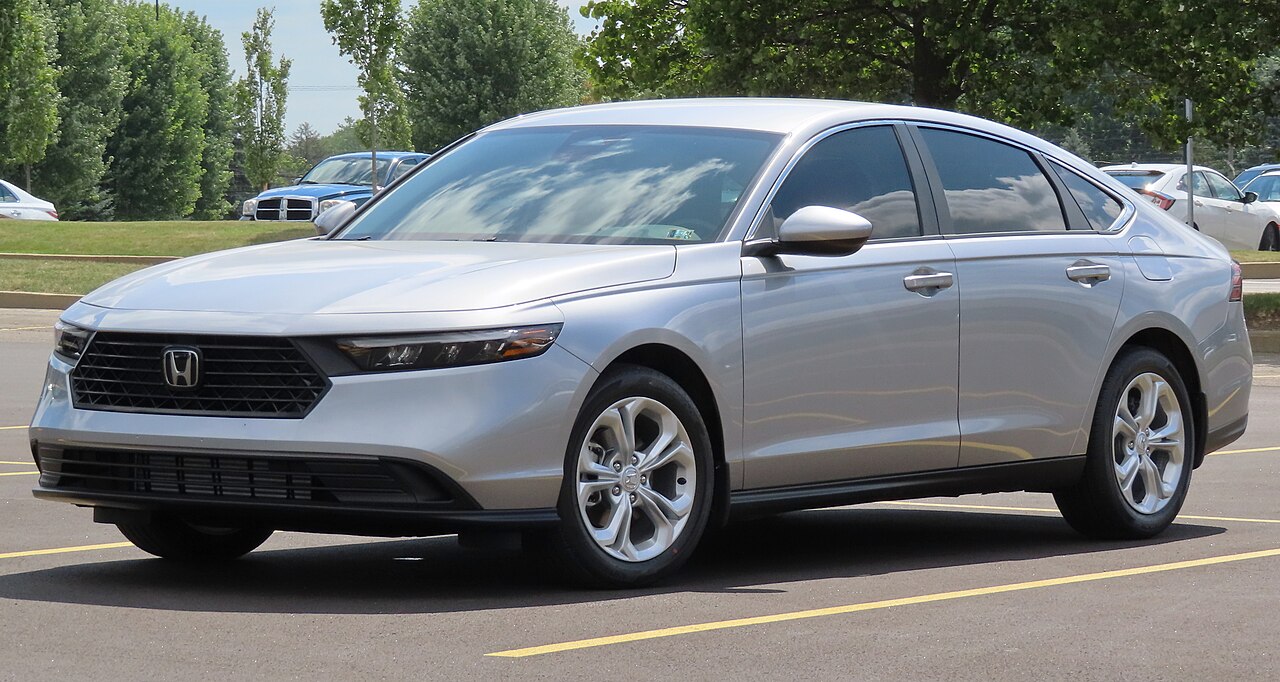
Honda Accord
View Specifications
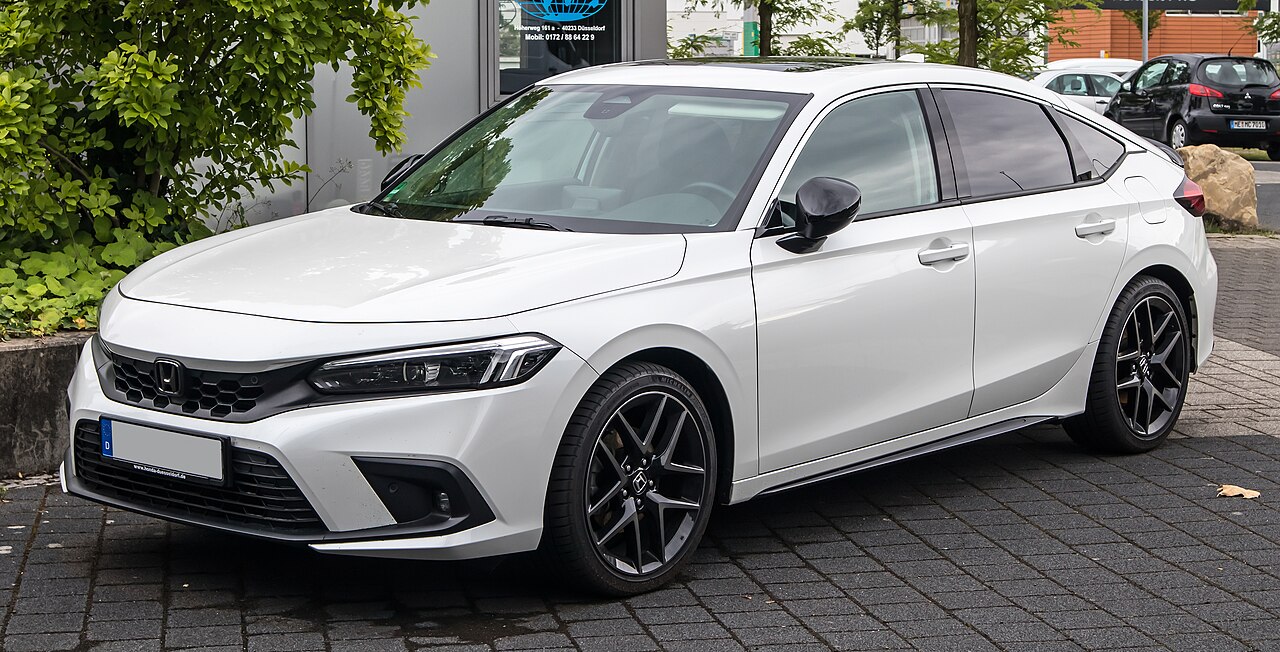
Honda Civic
View Specifications
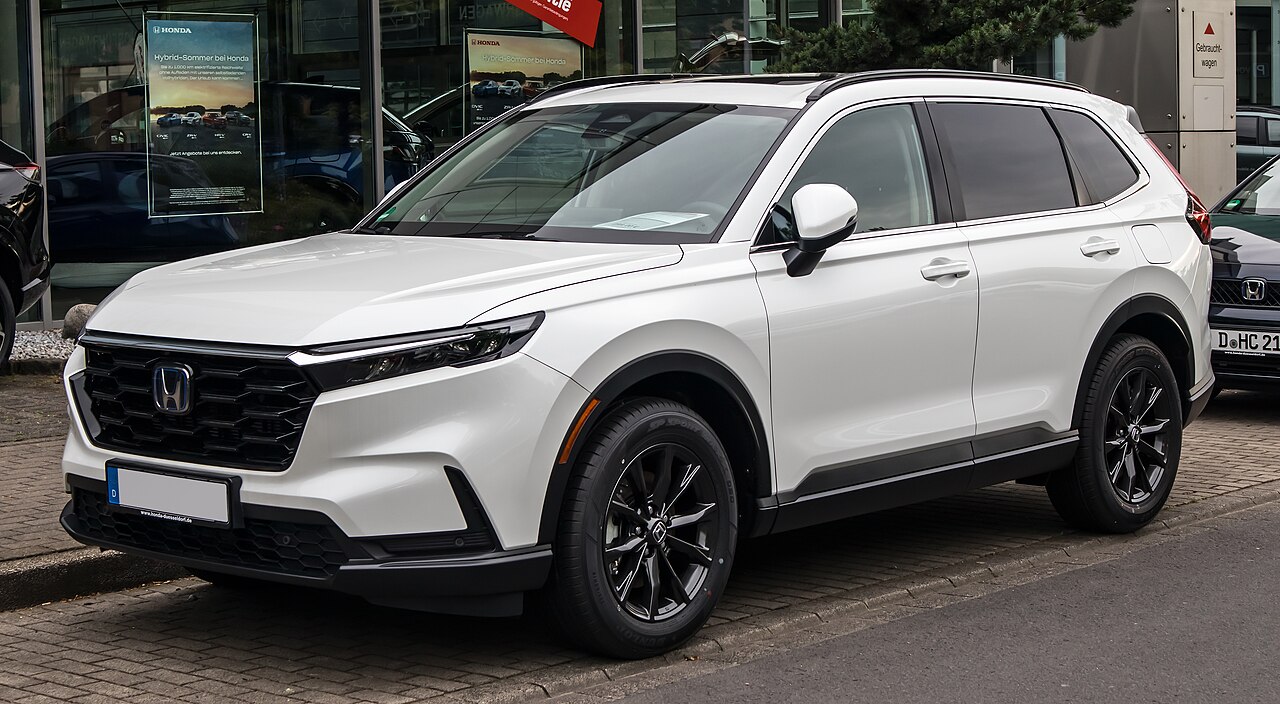
Honda CR-V
View Specifications
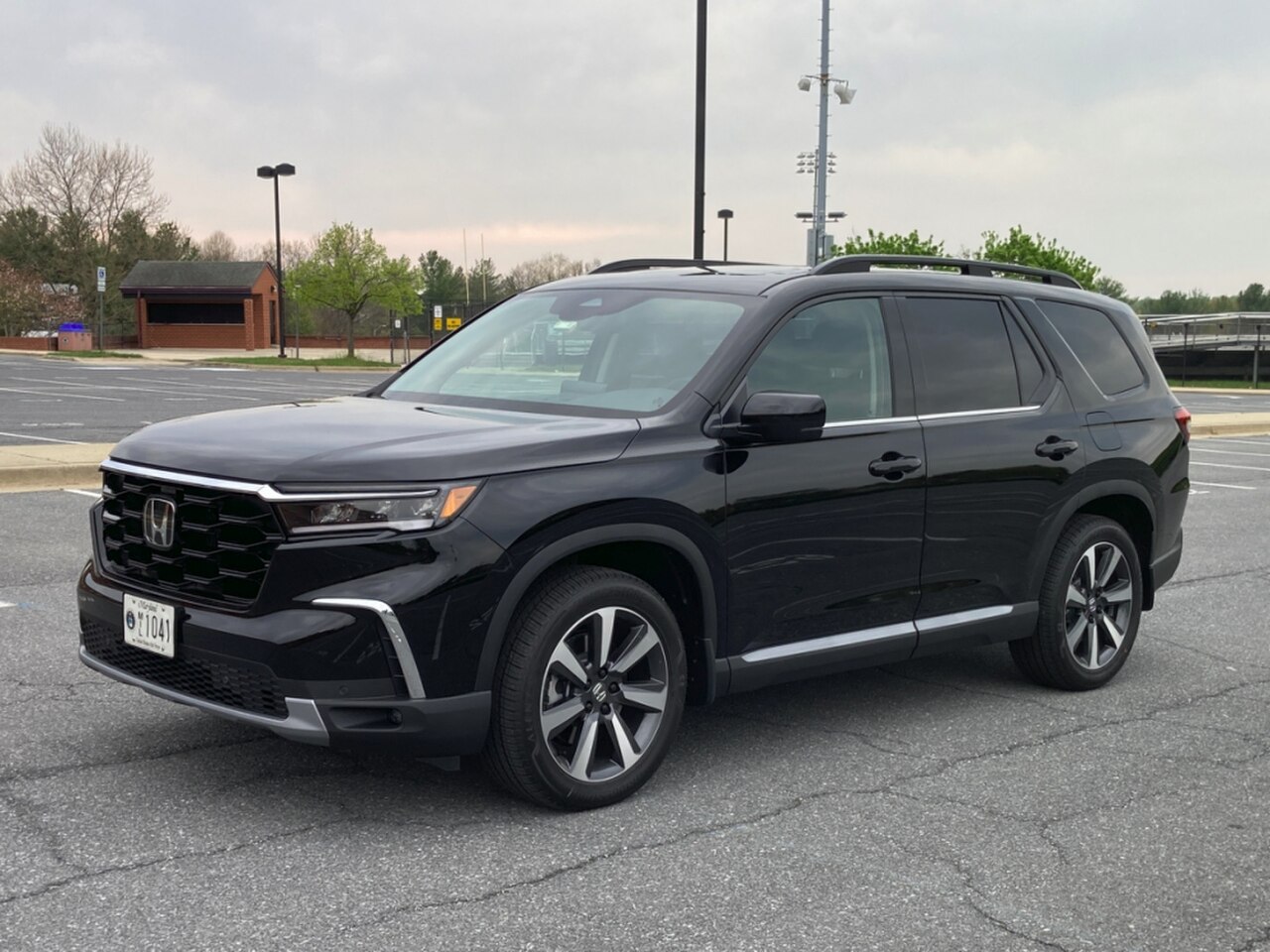
Honda Pilot
View Specifications
02Comparative Analysis
Honda Model Lineup Specification Matrix
Direct side-by-side engineering comparison across all active and indexed Honda model series. Specifications reflect current generation factory configurations, official EPA fuel economy testing, and certified powertrain output.
| Model & Class | Active Gen / Code | Engine / Powertrain | Horsepower | EPA Combined | Drivetrain | Transmission | Spec Sheet |
|---|---|---|---|---|---|---|---|
| Honda AccordSedan | Accord XI (CY) | L15BN, LFA | 192–204 hp | 32–44 MPG | FWD | CVT / eCVT | Specs |
| Honda CivicSedan | Civic XI (FE/FL) | K20C2, L15B8, K20C1 | 158–315 hp | 24–36 MPG | FWD | CVT / Manual | Specs |
| Honda CR-VSUV | CR-V VI (RS) | L15BL, LFB | 190–204 hp | 29–37 MPG | AWD | CVT / eCVT | Specs |
| Honda PilotSUV | Pilot IV (YG) (YG) | J35Y8 DOHC, J35Y8 DOHC Off-Road | 285 hp | 20–21 MPG | AWD | 10-Speed Automatic | Specs |
* EPA ratings are verified against federal testing database cycles (City / Highway / Combined). Individual real-world fuel economy varies with payload, tire compound, and thermal conditions.
03Chassis & Architecture
Honda Modular Platform Engineering
Honda Global Architecture (Compact / Midsize)
Advanced Compatibility Engineering (ACE) body structure utilizing high-tensile structural adhesives, acoustic spray foam, and optimized front crumple crossmembers for superior frontal offset crash protection.
04Internal Combustion & Electric
Honda Powertrain Families & Thermal Efficiency
Features low-inertia single-scroll turbocharging and Dual Variable Timing Control (Dual VTC), delivering brisk around-town throttle response.
Operates predominantly as an electric vehicle in urban driving, decoupling the combustion engine from wheel speed for whisper-quiet city operation.
05Security & Protection
Honda Active Safety Suite & Factory Warranty Audit
Honda Sensing
Civic, Accord, and CR-V models consistently achieve 5-Star Overall Vehicle Scores from the NHTSA and Top Safety Pick+ honors from the IIHS.
Key Sensor & Driver Assistance Technologies:
- Collision Mitigation Braking System (CMBS) with wide-angle monocular camera
- Road Departure Mitigation System (RDM) and Lane Keeping Assist System (LKAS)
- Adaptive Cruise Control (ACC) with Low-Speed Follow and Traffic Jam Assist
- Traffic Sign Recognition (TSR)
Factory Warranty Terms & Transfer Audit
5 Yrs / 60k Mi
Powertrain Limited
3 Yrs / 36k Mi
Bumper-to-Bumper
Honda factory limited warranties transfer automatically to secondary owners at no charge for the remaining duration and mileage balance.
* Coverage validated against official manufacturer customer service warranty bulletins. Electric battery packs carry standard 8-to-10-year high-voltage component warranties.
06Purchasing Guide
Honda Buyer Decision Matrix
Honda Civic (Sport / Touring)
Exceptional driving dynamics, up to 40 MPG highway, and class-leading residual value retention.
Honda CR-V Hybrid
Massive 39.3 cu ft cargo capacity behind the second row, 40 MPG city, and standard Honda Sensing.
07Engineering Reference
Essential Technical Guides for Honda Shoppers
17-Digit VIN Number Architecture & Decoding Guide
How to decode your Honda's WMI origin code, plant location, engine designation, and check digit to audit safety recalls.
Transmission Types Compared: CVT vs DCT vs Torque-Converter
Detailed engineering analysis of Wet Dual-Clutch, stepped hydraulic automatics, and e-CVT planetary hybrid gearboxes.
AWD vs 4WD vs FWD vs RWD: Mechanical Principles Explained
Electro-hydraulic multi-plate clutches vs mechanical center differentials: torque vectoring and all-weather capability.
Engine Displacement Guide: Bore, Stroke & Swept Volume
How cylinder volumetric capacity, compression ratios, and thermal efficiency dictate real-world power and emissions.
EPA Fuel Economy Explained: City, Highway & Combined MPG
Understanding official federal dynamometer test schedules and how the harmonic average combined MPG formula is calculated.
Turbocharged vs Naturally Aspirated Engines
Exhaust turbine boost dynamics, charge-air intercooling, low-RPM torque curves, and long-term maintenance differences.
08Chassis Registry
Honda Generation History & Chassis Codes
09Owner & Buyer Inquiries
Honda: Essential Technical & Ownership Questions
How does Honda's Two-Motor Hybrid system work without a transmission?
Honda's two-motor hybrid system (e:HEV) does not use a conventional stepped automatic transmission or a belt CVT. At low and medium speeds, the 2.0-liter Atkinson-cycle engine powers a generator motor, which supplies electricity to a 181-hp propulsion motor driving the front wheels. At steady highway cruising speeds (where combustion engines operate at peak thermal efficiency), a hydraulic lock-up clutch engages directly, connecting the gasoline engine to the front wheels via a fixed gear ratio.