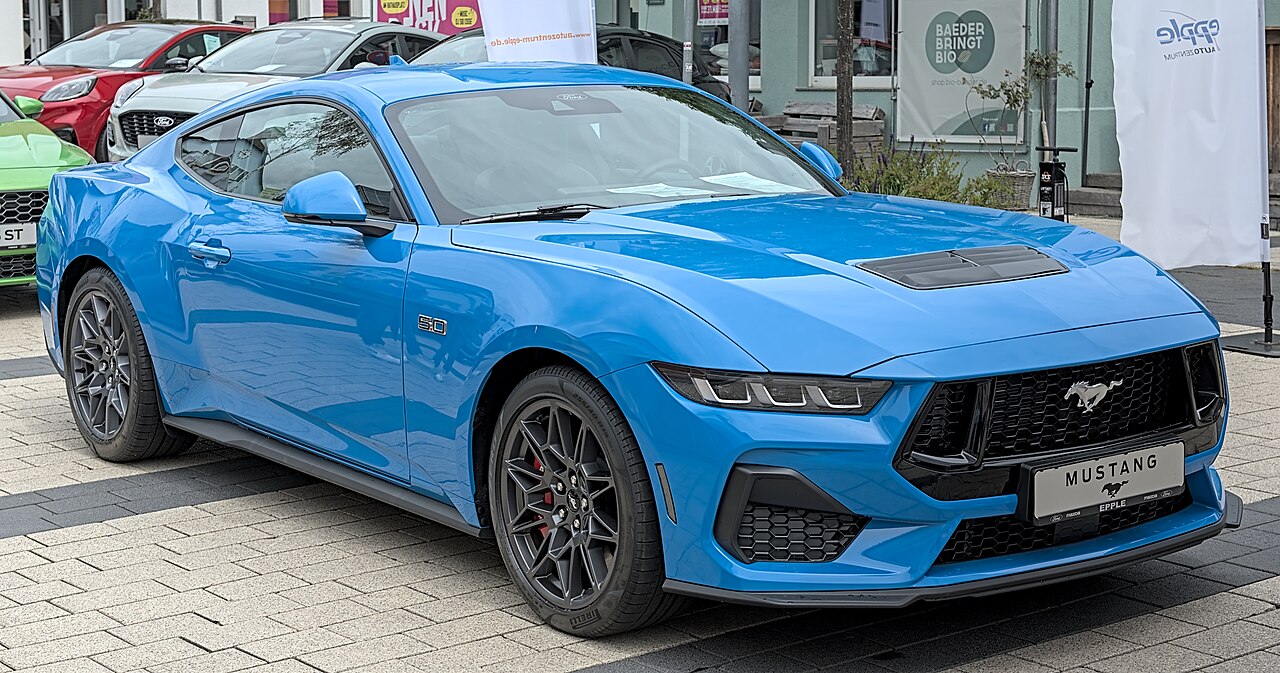
Toyota Hybrid Lineup Compared: Corolla vs. Camry vs. RAV4 (e-CVT, MPG & Battery Systems)
Direct Toyota hybrid comparison: Corolla vs Camry vs RAV4. Compare official EPA MPG ratings, 5th-generation THS architecture, e-CVT planetary gearboxes, and Electronic On-Demand AWD.
Car Data Index Editorial Desk
Automotive data desk · Sources: NHTSA · EPA · OEM records
The Benchmark of Electrification: Toyota's 5th-Generation Hybrid Architecture
When Toyota introduced the first-generation Prius in 1997, automotive critics questioned whether dual-motor combustion-electric powertrains could survive the mechanical rigors of mass-market commercial operation. Fast-forward three decades, and Toyota Motor Corporation has manufactured over 25 million hybrid electric vehicles globally, proving that its Toyota Hybrid System (THS) is the undisputed global benchmark for mechanical durability, thermal combustion efficiency, and low total cost of ownership.
Today, Toyota has democratized hybrid motoring across every mainstream passenger segment on its modular TNGA (Toyota New Global Architecture) platforms. This technical engineering audit directly compares Toyota's three most popular hybrid vehicles: the ultra-efficient Corolla Hybrid, the executive Camry Hybrid, and the versatile RAV4 Hybrid.
Side-by-Side Hybrid Comparison Matrix: Specs, MPG & Drivetrains
The comparative engineering matrix below analyzes verified factory specifications across current production generations of Toyota's hybrid portfolio:
| Vehicle Model | Combustion Engine | Combined System Output | EPA City / Hwy / Comb | Battery Chemistry | AWD Architecture | Cargo Space (cu ft) |
|---|---|---|---|---|---|---|
| Toyota Corolla Hybrid | 1.8L Atkinson I4 (2ZR-FXE) | 138 hp @ 5,200 RPM | 53 / 46 / 50 MPG | Lithium-Ion (0.9 kWh) | FWD or Electronic AWD | 13.1 cu ft |
| Toyota Camry Hybrid (XV80) | 2.5L Dynamic Force (A25A-FXS) | 225 hp (FWD) / 232 hp (AWD) | 53 / 50 / 51 MPG | Lithium-Ion (1.0 kWh) | FWD or Electronic On-Demand | 15.1 cu ft |
| Toyota RAV4 Hybrid (XA50) | 2.5L Dynamic Force (A25A-FXS) | 219 hp combined | 41 / 38 / 40 MPG | Lithium-Ion (1.6 kWh) | Electronic On-Demand AWD (Std) | 37.6 cu ft |
The Engineering Magic: Why the Toyota e-CVT Does Not Break
Many car shoppers hesitate when seeing the letters "CVT", associating them with troublesome belt-and-pulley continuously variable transmissions used in economy cars. However, Toyota's electronic Continuously Variable Transmission (e-CVT) shares zero mechanical components with traditional CVTs.
To understand how automotive gearboxes compare under load, explore our detailed guide on Transmission Types Compared.
In Toyota's e-CVT:
- There are no steel push-belts, no rubber drive belts, and no variable-width pulleys that can stretch, slip, or snap.
- There is no hydraulic torque converter causing frictional pumping losses or fluid overheating.
- Instead, an epicyclic planetary gearset connects the Atkinson-cycle combustion engine to the planet carrier, motor-generator 1 (MG1) to the sun gear, and motor-generator 2 (MG2) to the outer ring gear driving the differential.
- Gear ratios are altered purely by adjusting the electromagnetic rotational speed of the electric motors. Because gear teeth are permanently in mesh with zero friction clutches engaged during forward movement, Toyota e-CVT transaxles routinely surpass 300,000 miles with simple fluid changes.
1. Toyota Corolla Hybrid: Peak Urban Commuter Economy
The Toyota Corolla Hybrid is engineered for maximum fuel efficiency at an accessible price point. Powered by the refined 1.8-liter 2ZR-FXE Atkinson-cycle four-cylinder engine paired with dual electric motors, the Corolla Hybrid generates 138 horsepower and 156 lb-ft of torque.
In city driving, where stop-and-go traffic allows motor-generator 2 to capture kinetic energy during deceleration, the Corolla Hybrid achieves an official 53 MPG city rating and 50 MPG combined. With an 11.4-gallon fuel tank, the vehicle delivers an exceptional 570-mile cruising range between fill-ups.
Available Electronic On-Demand All-Wheel Drive adds a dedicated high-torque rear motor, providing winter traction without requiring a mechanical driveshaft through the cabin floor, preserving rear legroom and trunk capacity.
2. Toyota Camry Hybrid (XV80): Redefining Executive Efficiency
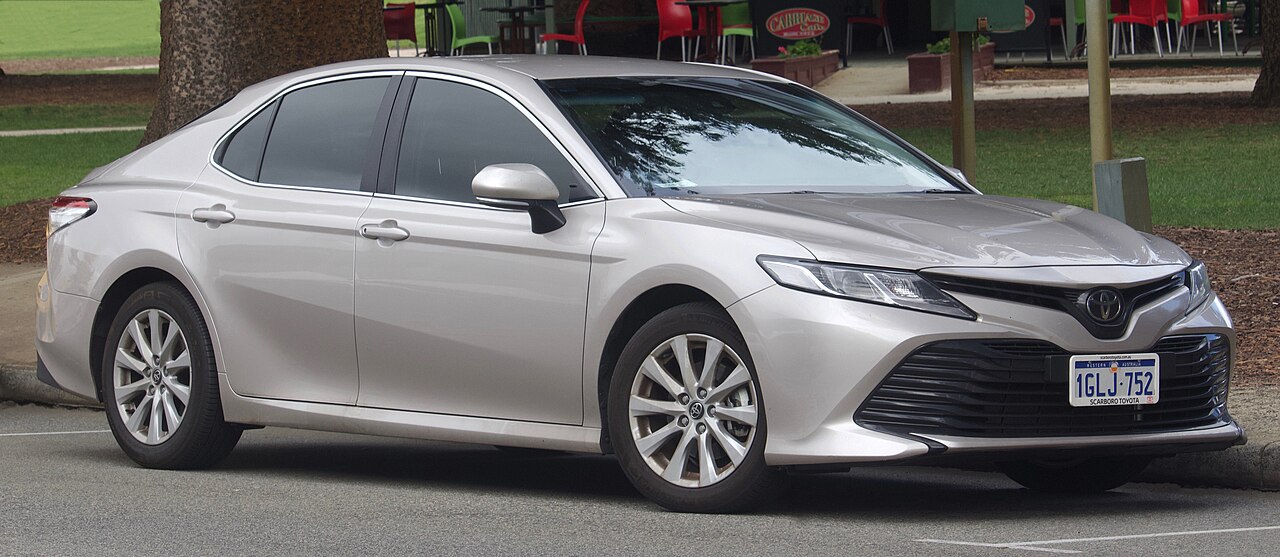
Beginning with the ninth-generation Camry (XV80), Toyota eliminated traditional standalone gasoline V6 and four-cylinder engines, establishing the Camry as an exclusively hybrid sedan. Powered by the state-of-the-art fifth-generation Toyota Hybrid System (THS 5) paired with a 2.5-liter Dynamic Force engine, the Camry delivers 225 horsepower in front-wheel drive and 232 horsepower in all-wheel drive.
The Dynamic Force engine achieves a world-class 41% thermal combustion efficiency via high-speed combustion, multi-hole direct injectors, and laser-clad intake valve seats. To learn how compression ratios and thermal efficiency dictate real-world power, explore our guide on Engine Displacement Explained.
Despite brisk 7.0-second 0–100 km/h acceleration, the Camry LE Hybrid achieves an EPA-rated 51 MPG combined (53 city / 50 highway). To understand how federal dynamometer test schedules calculate these numbers, review our guide to EPA City, Highway & Combined MPG Cycles. On open highway stretches, the Camry Hybrid easily exceeds 650 miles on a single tank of regular 87-octane gasoline.
3. Toyota RAV4 Hybrid (XA50): The Versatile Utility Benchmark
As America's best-selling passenger vehicle outside of pickup trucks, the Toyota RAV4 Hybrid combines utility, elevated ground clearance (8.1 inches), and generous cargo capacity (37.6 cu ft behind row two / 69.8 cu ft folded) with sports-compact fuel economy.
Standard Electronic On-Demand AWD utilizes a dedicated 54-hp rear electric motor that engages instantly when cornering or accelerating on wet or snowy pavement. Developing 219 combined horsepower, the RAV4 Hybrid accelerates from 0 to 100 km/h in 7.3 seconds—nearly a full second faster than the non-hybrid 2.5L gasoline model—while returning an EPA-rated 40 MPG combined.
Electronic On-Demand AWD vs. Traditional Mechanical AWD
Toyota's Electronic On-Demand AWD (AWD-e) system represents a paradigm shift in crossover all-wheel-drive architecture:
- Traditional mechanical AWD systems use a front-to-rear propshaft, a center transfer case, and a rear differential, adding approximately 150–200 lbs of parasitic weight and constant frictional drag.
- Toyota's AWD-e system eliminates the driveshaft entirely. Instead, a permanent-magnet electric motor is integrated directly into the rear axle assembly.
- When sensors detect front-wheel slip or during hard acceleration, current is routed to the rear motor within milliseconds, providing up to 80% rear-biased torque split to stabilize the chassis before returning to front-drive efficiency during steady highway cruising.
Long-Term Durability & Factory Battery Warranty Protection
Toyota backs its hybrid architecture with industry-leading factory warranty protection:
- 10-Year / 150,000-Mile Hybrid Battery Warranty: Covers the high-voltage lithium-ion or nickel-metal hydride traction battery against manufacturer defects and premature degradation.
- 8-Year / 100,000-Mile Hybrid System Warranty: Protects the hybrid power control unit (PCU/inverter) and e-CVT transaxle.
- Transferable Ownership: Unlike certain competitors whose warranties drop upon resale, Toyota's 10-year hybrid battery warranty transfers automatically to subsequent owners with zero paperwork or administrative fees.
Before purchasing any used Toyota hybrid, verify vehicle production history, open safety recalls, and factory equipment codes using our free 17-Digit VIN Number Tool.
Purchasing Verdict: Which Toyota Hybrid Fits Your Needs?
- Choose the Toyota Corolla Hybrid: If you want the most affordable, ultra-reliable daily commuter car with exceptional 50+ MPG city fuel economy and available all-weather electronic AWD.
- Choose the Toyota Camry Hybrid: If you want executive comfort, whisper-quiet highway ride quality, 232 horsepower passing punch, and an incredible 650-mile road trip cruising range.
- Choose the Toyota RAV4 Hybrid: If you need family cargo utility, standard all-wheel drive, elevated ground clearance for winter snow, and 40 MPG efficiency without compromising cargo volume.
Frequently asked questions
How does Toyota's e-CVT transmission work and does it have a belt?
Toyota's e-CVT is completely different from a conventional belt-driven CVT. It contains no belts, cones, hydraulic pulleys, or friction clutches. Instead, it uses a planetary gearset where the gasoline engine connects to the planet carrier, motor-generator 1 (MG1) connects to the sun gear, and motor-generator 2 (MG2) connects to the ring gear driving the wheels. Ratios are varied electromagnetically by controlling motor RPMs, making it virtually bulletproof.
What is the difference between Corolla Hybrid, Camry Hybrid, and RAV4 Hybrid?
The Corolla Hybrid is a compact commuter utilizing a 1.8-liter engine (138 hp) achieving up to 53 MPG. The Camry Hybrid is a mid-size sedan powered by the latest 2.5-liter Dynamic Force engine (225–232 hp) delivering 51 MPG. The RAV4 Hybrid is a compact crossover with standard Electronic On-Demand AWD, producing 219 hp, 37.6 cu ft of cargo room, and 40 MPG combined.
How long does a Toyota hybrid battery last and how much does it cost to replace?
Toyota hybrid battery packs are engineered to last the life of the vehicle, routinely exceeding 200,000 to 250,000 miles. Factory replacement costs range between $2,500 and $4,000, but all 2020 and newer models are covered by a 10-year or 150,000-mile factory warranty.
Do you have to plug in a Toyota hybrid vehicle to charge it?
No. Standard Toyota hybrids (Corolla Hybrid, Camry Hybrid, RAV4 Hybrid) are self-charging. The high-voltage lithium-ion battery is recharged automatically during driving via regenerative braking (capturing kinetic energy when slowing down) and by the gasoline engine spinning generator MG1.
Does Toyota's Electronic All-Wheel Drive (AWD-e) work well in snow?
Yes. Rather than relying on a heavy mechanical driveshaft running down the center of the car, Toyota's AWD-e system features a standalone permanent-magnet electric motor on the rear axle. When front sensors detect loss of traction or high acceleration, the rear motor supplies instant torque to the rear wheels.
Cite this page: https://cardataindex.com/blog/toyota-hybrid-lineup-compared-corolla-camry-rav4
Keep researching
Cross-check the numbers in this guide against live factory data in our specification index or decode a specific car with the free VIN decoder.