Longest-Lasting Modern Car Engines: Engineering Behind 200,000+ Mile Durability (Toyota Dynamic Force vs. BMW B58 vs. Ford Coyote V8 Metallurgy, Timing Chains & Thermal Management)
Which modern car engines consistently surpass 200,000 miles? Engineering analysis of Toyota 2.5L Dynamic Force, BMW B58 Turbo inline-6, and Ford 5.0L Coyote V8.
Car Data Index Editorial Desk
Automotive data desk · Sources: NHTSA · EPA · OEM records
The Modern 200,000-Mile Engineering Threshold
In the automotive golden era of the 1980s and 1990s, legendary powerplants like the Toyota 2JZ-GE, Nissan RB30, and Mercedes-Benz OM606 diesel earned reputations for indestructible durability through heavy, cast-iron engine blocks and conservative specific power outputs (often below 60 horsepower per liter).
Today, strict global emissions regulations, corporate average fuel economy standards (CAFE), and consumer demands for rapid acceleration have forced automotive engineers to extract over 100 to 170 horsepower per liter using all-aluminum cylinder castings, twin-scroll turbocharging, and extreme cylinder pressures exceeding 140 bar.
Yet, contrary to popular belief that "modern cars are built to be disposable," a select group of contemporary production engines has achieved mechanical longevity that rivals or exceeds the cast-iron icons of the past. Surviving beyond 200,000 miles (320,000 km) without major internal mechanical failure requires meticulous metallurgical selection, advanced thermal management, and fail-safe lubrication architectures.
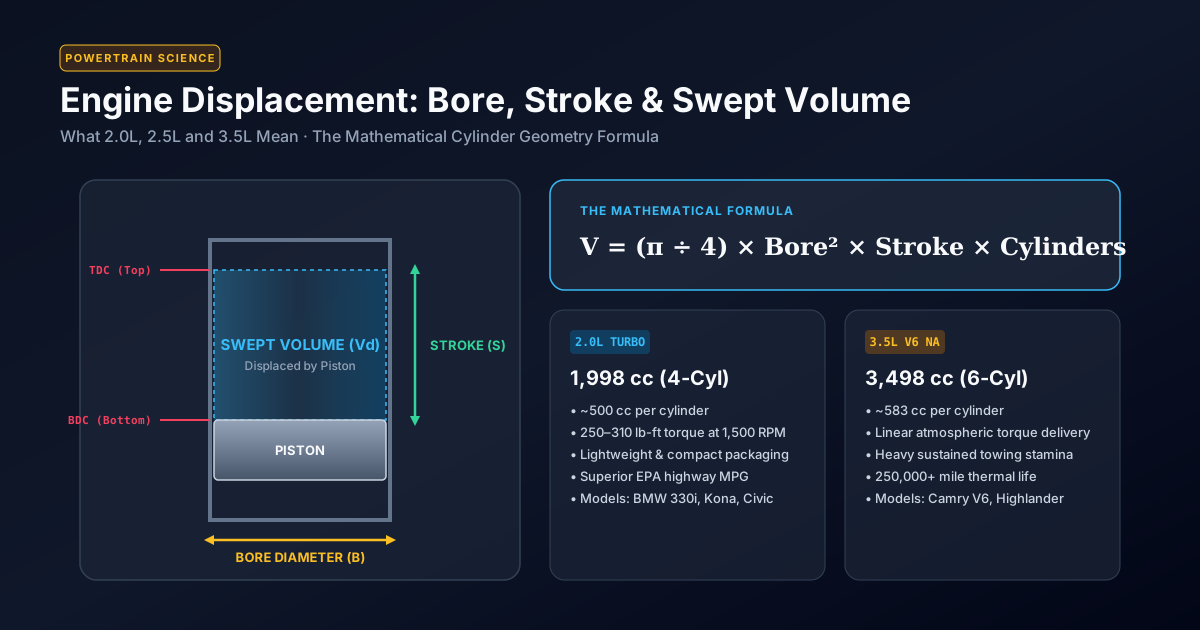
Explore our related engineering deep-dives on Engine Displacement and Cylinder Sizing and Turbocharged vs. Naturally Aspirated Longevity.
Technical Longevity Matrix: The Top 200,000-Mile Modern Engines
| Engineering Metric | Toyota 2.5L Dynamic Force (A25A-FKS) | BMW 3.0L Turbo Inline-6 (B58B30) | Ford 5.0L Coyote V8 (Gen 3 / Gen 4) |
|---|---|---|---|
| Engine Architecture | 2.5L Naturally Aspirated Inline-4 | 3.0L Twin-Scroll Turbocharged I6 | 5.0L Naturally Aspirated 90° V8 |
| Cylinder Block Construction | Aluminum Open-Deck with Cast-In Iron Liners | Aluminum Closed-Deck with Electric Arc Spray | Aluminum Deep-Skirt with PTWA Wire Arc Liners |
| Crankshaft & Rods | Forged Steel Crank, Sintered Forged Rods | Forged Steel Crank, Forged Steel Rods | Forged Steel Crankshaft, Sintered Forged Rods |
| Fuel Delivery System | Dual Injection: D-4S (Direct + Port) | Ultra-High Pressure DI (350 bar Solenoid) | Dual Fuel: PFDI (Direct + Port Injection) |
| Timing Drive Hardware | Single-Stage Roller Chain (Hydraulic Tension) | Rear-Mounted Roller Chain + Heat-Treated Guides | Dual-Stage Primary/Secondary Roller Chains |
| Variable Valve Timing | Electric VVT-iE (Intake) + Hydraulic (Exhaust) | Double-VANOS (Hydraulic) + Valvetronic III | Twin Independent Variable Cam Timing (Ti-VCT) |
| Specific Power (hp/liter) | 81.2 hp / liter | 127.3 to 133.3 hp / liter | 96.0 to 100.0 hp / liter |
| Expected Lifespan (Miles) | 300,000+ Miles with standard maintenance | 250,000+ Miles with proper cooling care | 250,000+ Miles with 5k-mile oil intervals |
| Vulnerable Wear Items | Electric water pump failure (~150k mi) | Plastic coolant flange, oil filter housing gaskets | Cam phaser solenoids, VCT solenoids (~180k mi) |
1. Cylinder Block Metallurgy: Closed-Deck vs. Open-Deck Thermal Rigidity
The structural foundation of engine longevity is the crankcase casting. When an engine produces combustion peak pressures, the cylinder barrels undergo dynamic radial expansion (cylinder breathing):
``` CYLINDER BLOCK ARCHITECTURE AND COOLING JACKET COMPARISON
Open-Deck Block (Lightweight, High Cooling Flow): [ Cylinder Wall ] ====> Free-standing cylinder barrel [ Coolant Cavity ] =====> Open gap around top of bore; can flex under 140+ bar boost pressure!
Closed-Deck Block (Maximum Structural Rigidity - BMW B58): [ Cylinder Wall ] ====> Cylinder barrel fully cast into outer block perimeter [ Solid Deck ] ====> Only drilled water passage holes; ZERO bore distortion at 250k+ miles! ```
BMW B58: The Closed-Deck Turbo Revolution
When BMW designed the B58 inline-six to replace the open-deck N55, their goal was to support both high-output street applications and sustained endurance motorsport:
- Closed-Deck Crankcase: The cylinder bores are cast integrally into the upper block surface, joined solidly at the top deck with only micro-machined coolant metering passages. This eliminates cylinder bore ovalization under heavy boost, ensuring piston rings maintain perfect tension and radial oil seal beyond 200,000 miles.
- Thermal Spray Arc Liners (LDS): BMW replaced heavy pressed-in iron cylinder liners with a 0.3 mm micro-thin wire arc sprayed iron matrix. This drastically enhances heat transfer directly into the engine water jackets while reducing mechanical friction.
Toyota Dynamic Force: Laser-Clad Valve Seats
Toyota’s A25A utilizes an open-deck aluminum block paired with ductile iron cylinder sleeves, but achieves unparalleled longevity through its cylinder head architecture:
- Laser-Clad Valve Seats: Instead of pressing traditional powdered metal valve seat rings into the cylinder head, Toyota uses robotic lasers to weld a specialized stellite copper-cobalt alloy directly onto the aluminum intake ports.
- Enhanced Thermal Conduction: Eliminating the thermal boundary resistance of pressed rings drops intake valve temperatures by up to 20°C, preventing valve tulip distortion, seat recession, and carbon bake-on for decades of highway driving.
2. The Direct-Injection Carbon Problem and Dual-Fuel Solutions
The fatal flaw of first-generation direct-injection (GDI/DGI) engines produced between 2005 and 2015 was intake valve carbon fouling. In port-injected engines, atomized gasoline continuously sprays across the backs of intake valve tulips, washing away blow-by oil mist and PCV condensates. Direct injection relocated fuel injectors into the combustion chamber ceiling, leaving intake valves dry. Over 60,000 to 100,000 miles, baked carbon choked intake airflow, inducing misfires and rough idling.
``` DUAL-FUEL INJECTION (TOYOTA D-4S / FORD PFDI) VALVE CLEANING
[ Low-Pressure Port Injector ] ===> Sprays Fuel Vapor Over Intake Valve
|
v (Cleans Valve & Prevents Carbon Crust!) [ Intake Valve ]
|
[ High-Pressure Direct Injector ] ==> Sprays Directly into Cylinder (High Load / High Octane) ```
The Dual-Injection Immunity: Toyota D-4S and Ford PFDI
- Toyota D-4S (Direct and Port Injection): Incorporates both a low-pressure port injector in the intake runner and a 200-bar direct injector in the combustion chamber. Under light engine load and idle, the engine runs primarily on port injection, bathing the intake valves in detergent-rich gasoline. Under hard acceleration, the direct injector takes over to provide charge cooling and prevent knock.
- Ford Gen 3/4 Coyote PFDI: Adopted in 2018, Ford's dual-fuel system resolved all intake valve coking issues while simultaneously improving cold-start emissions. Vehicles running this architecture routinely reach 250,000 miles with pristine intake valves requiring zero walnut-blasting services.
BMW's Direct Injection Precision (HPI 350 Bar)
BMW retained direct-only injection on the B58, but solved carbon accumulation through sophisticated positive crankcase ventilation (PCV):
- Integrated Multi-Stage Cyclone Oil Separators: Molded directly into the magnesium valve cover, multiple miniature centrifugal cyclone chambers spin crankcase gases, separating 98% of atomized oil particles before they can enter the intake tract.
- Ultra-High Pressure 350-Bar Injectors: Solenoid-activated multi-hole injectors create such ultra-fine droplet atomization that combustion remains clean, minimizing piston ring blow-by soot.
3. Timing Chain Drive Geometries: The Death of the Rubber Belt
A primary cause of catastrophic modern engine failure is the failure of the valvetrain timing mechanism. While several manufacturers experimented with "wet timing belts" running submerged in motor oil (which frequently degrade and clog oil pickup screens), the 200,000-mile champions rely on robust, multi-link steel roller chains.
``` TIMING CHAIN DRIVE DURABILITY PRINCIPLES
Poor Design: Long single-row chain + plastic tensioner guides + 15,000-mile oil intervals => Soot in oil wears chain pins -> Chain "stretches" -> Cam phaser timing codes -> Failure!
Engineered Durability: Heavy-duty roller chain + dual hydraulic ratcheting tensioners + 5k oil intervals => Zero chain elongation; lasts 300,000+ miles without replacement! ```
1. Hydraulic Ratcheting Tensioners with Anti-Drainback Valves: The Toyota Dynamic Force and Ford Coyote utilize hydraulic timing chain tensioners backed by mechanical ratchets. When the engine is shut down and oil pressure drops to zero, the mechanical ratchet prevents the tensioner arm from collapsing, eliminating startup chain rattle and sprocket tooth skipping. 2. Rear-Mounted Timing Chain on the BMW B58: BMW relocated the timing chain to the rear of the engine block (facing the transmission). While controversial among DIY mechanics due to accessibility, this design isolates the timing chain from torsional crankshaft vibrations generated at the front harmonic balancer, extending chain and guide rail fatigue life beyond 250,000 miles.
4. Lubrication & Thermal Management Under Severe Duty
Oil breakdown and hot-spot oil vaporization are the primary culprits behind piston ring sticking and bearing scoring:
Variable-Displacement Trochoid Oil Pumps
Old engines used fixed mechanical oil pumps that created excessive hydraulic resistance at high RPMs and inadequate flow at hot idle. Modern long-lasting engines use electronically modulated or vane-type variable-displacement oil pumps:
- The pump internal eccentric ring adjusts displacement based on oil temperature, engine load, and engine speed, delivering optimal hydrodynamic wedge pressure (typically 35–65 psi) to the crankshaft rod and main bearings across all operational conditions.
Piston Cooling Oil Jets (Squirters)
Beneath each cylinder barrel, dedicated spring-loaded check valves spray a continuous jet of pressurized oil directly onto the undersides of the piston crowns. This pulls heat away from the piston ring lands, preventing piston expansion scuffing during long highway uphill climbs under full payload.
The 200,000-Mile Ownership Playbook: Maintenance Imperatives
To guarantee your modern vehicle reaches the 200,000 to 300,000-mile milestone without major mechanical surgery, adhere to these non-negotiable operational principles:
1. Adopt a 5,000-Mile / 6-Month Full-Synthetic Oil Interval: Disregard manufacturer 10,000-mile oil monitor intervals. Direct-injection engines shear motor oil viscosity and accumulate fuel dilution and abrasive soot. Fresh oil preserves timing chain link pins and VVT cam phasers. 2. Coolant Flushes at 100,000 Miles / 5 Years: Modern silicated and organic acid technology (OAT) coolants turn acidic over time, eroding water pump impellers and plastic cooling pipe connectors. 3. Transmission Fluid Servicing at 60,000 Miles: "Lifetime transmission fluid" is a marketing myth. Servicing torque converter and dual-clutch fluids preserves clutch friction linings and valve-body solenoids. 4. Immediate Remediation of Vacuum and PCV Leaks: Unmetered air or torn PCV diaphragms lean out combustion mixtures, increasing exhaust gas temperatures (EGTs) and accelerating catalytic converter and turbocharger bearing thermal fatigue.
Frequently asked questions
Can a modern turbocharged engine realistically achieve 200,000 to 250,000 miles without a rebuild?
Yes. Modern turbocharged engines like the BMW B58 (3.0L inline-6) and Honda 2.0T (K20C) routinely surpass 200,000 miles when equipped with water-cooled center bearing housings, auxiliary electric after-run coolant pumps that eliminate thermal turbocharger coking, and full-synthetic engine oil changed every 5,000 to 7,500 miles.
Why is the Toyota Dynamic Force 2.5L (A25A) considered the gold standard of modern engine longevity?
The Toyota A25A engine combines a 40-41% thermal efficiency Atkinson cycle with Toyota's D-4S dual-injection system (combining port and direct injection to eliminate carbon accumulation), laser-clad valve seats that improve heat transfer to the cylinder head, and a variable-displacement trochoid oil pump that ensures adequate lubrication pressure at all RPMs.
What causes early timing chain failure on some modern direct-injection vehicles?
Direct injection creates microscopic soot particles that wash past piston rings into engine oil. If oil change intervals exceed 10,000 miles, this soot-laden oil acts as an abrasive slurry on timing chain pins and bushing links, causing chain elongation ('stretch') and premature guide rail fracture.
How does Ford's 5.0L Coyote V8 resolve intake valve carbon buildup in its later generations?
Starting in 2018 (Gen 3 Coyote), Ford integrated high-pressure direct injection alongside existing port injectors. At low loads and idle, port injectors spray gasoline across the backs of the intake valves, continuously washing away blow-by oil vapors delivered through the positive crankcase ventilation (PCV) system.
What is the single most critical maintenance habit required to guarantee a 200,000-mile engine lifespan?
Strict adherence to 5,000-mile / 6-month synthetic oil changes using API SP / ILSAC GF-6 certified motor oils with high thermal shear resistance (HTHS > 2.9 cP). This prevents Low-Speed Pre-Ignition (LSPI), timing chain abrasion, and hydraulic variable valve timing (VVT) solenoid clogging.
Cite this page: https://cardataindex.com/blog/longest-lasting-200k-mile-engines-b58-dynamic-force-coyote
Keep researching
Cross-check the numbers in this guide against live factory data in our specification index or decode a specific car with the free VIN decoder.