Nissan VC-Turbo vs. Toyota Hybrid: Variable Compression vs. Electrified Simplicity
Engineering analysis: Nissan 1.5L variable-compression turbo (KR15DDT) vs Toyota 2.5L Dynamic Force hybrid (THS 5). Compare mechanical complexity and repair costs.
Car Data Index Editorial Desk
Automotive data desk · Sources: NHTSA · EPA · OEM records

Executive Summary: Two Radically Opposing Paths to 40+ MPG Efficiency
Automakers face intense regulatory pressure to slash fleet carbon emissions and deliver 35 to 40+ MPG fuel economy while preserving the high horsepower and passing torque modern crossover SUV buyers demand. To conquer this thermodynamic challenge, two Japanese automotive giants arrived at diametrically opposed engineering solutions: the **Nissan Variable Compression Turbo (VC-Turbo) and the Toyota Hybrid Synergy Drive (THS 5)**.
- **Nissan** took internal combustion engineering to its ultimate theoretical frontier by creating the world's first production variable-compression engine: the 1.5-liter three-cylinder VC-Turbo (KR15DDT) found in the Nissan Rogue. Utilizing a harmonic electric actuator and an intricate multi-link lower crankshaft mechanism, the engine physically changes piston stroke on the fly, altering compression ratios between 8.0:1 and 14.0:1 in real time.
- **Toyota** rejected mechanical engine complexity in favor of electromechanical integration. Utilizing its mature fifth-generation Hybrid Synergy Drive in the RAV4, Camry, and Highlander, Toyota pairs a simple, under-stressed 2.5-liter naturally aspirated Atkinson-cycle four-cylinder with two electric motor-generators and an electronically controlled planetary power-split transmission (e-CVT) completely devoid of belts, clutches, alternators, or starter motors.
This technical engineering comparative audit evaluates mechanical thermodynamics, multi-link bearing stresses, real-world highway and city fuel economy, NHTSA defect investigation records, and verified 200,000-mile reliability across both technologies.
Side-by-Side Mechanical Architecture Matrix
The comparative engineering matrix below analyzes verified technical parameters between Nissan's 1.5L VC-Turbo and Toyota's 2.5L Hybrid Synergy Drive:
| Engineering Parameter | Nissan 1.5L VC-Turbo (KR15DDT) | Toyota 2.5L Hybrid System (THS 5 / A25A-FXS) |
|---|---|---|
| Thermodynamic Concept | Variable Compression Ratio via Harmonic Multi-Link | Atkinson Cycle via Late Intake Valve Closing + Electric Motor Fill |
| Engine Configuration | 1.5-Liter Transverse In-Line 3-Cylinder Turbo | 2.5-Liter Transverse In-Line 4-Cylinder Naturally Aspirated |
| Compression Ratio Range | Continuously Variable from 8.0:1 to 14.0:1 | Fixed 14.0:1 Ultra-High Geometric Compression Ratio |
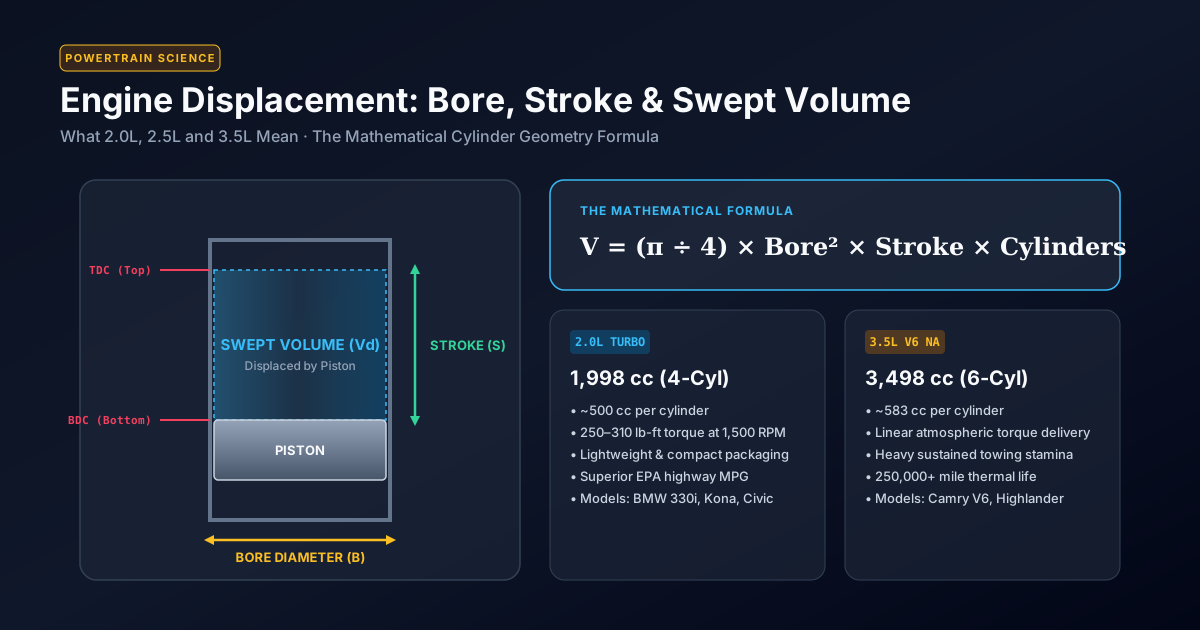
| Bore x Stroke (mm) | 84.0 mm x 88.9 mm (Variable stroke varies ±1.2 mm) | 87.5 mm x 103.4 mm (Fixed Undersquare Long-Stroke) |
| Aspiration / Boost | Single-Scroll Turbocharger (~16–22 PSI Boost) | Naturally Aspirated (Atmospheric / 0 PSI Boost) |
| Combustion Fuel Delivery | Dual Injection (Direct In-Cylinder + Low-Pressure Port) | Dual D-4S (High-Pressure Direct + Low-Pressure Port) |
| Horsepower Output | 201 hp @ 5,600 RPM | 219 net hp (FWD) / 243 net hp (AWD with rear e-motor) |
| Torque Output | 225 lb-ft @ 2,800–4,000 RPM (Turbo Plateau) | 163 lb-ft (engine) + 149 lb-ft instantaneous electric motor |
| Transmission Type | Xtronic Continuously Variable Transmission (Steel Belt) | Planetary Power-Split Electronic Transaxle (e-CVT - No Belts) |
| AWD Architecture | Mechanical Propshaft with Rear Wet Clutch Pack | Electronic On-Demand AWD (Dedicated 54 hp Rear Electric Motor) |
| Moving Mechanical Parts | Actuator motor, control shaft, multi-link rods, turbo | Crankshaft, connecting rods, two electric motor-generators |
| Eliminated Components | Standard fixed connecting rods replaced by 4-piece links | No starter motor, no alternator, no drive belts, no turbo |
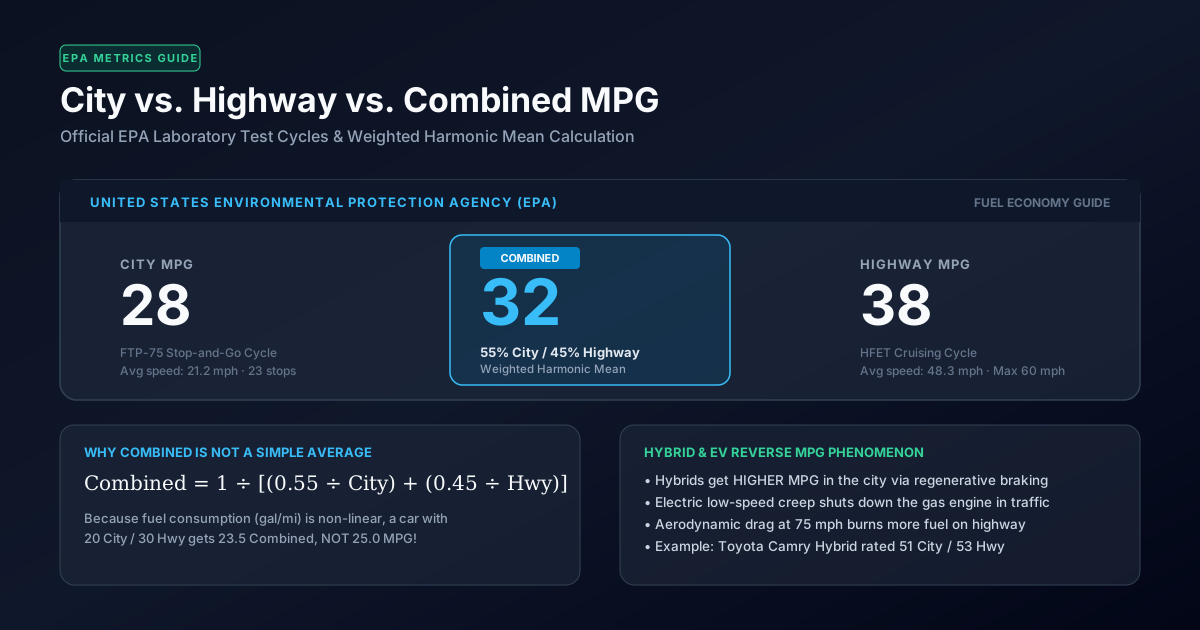
| EPA Fuel Economy (City/Hwy) | 28 City / 34 Hwy / 31 Comb MPG (AWD) | 41 City / 38 Hwy / 39 Comb MPG (AWD) |
| NHTSA Investigation | Subject to NHTSA ODI Engine Bearing Failure Audit | Zero powertrain mechanical investigations reported |
| Expected Service Life | 120,000–150,000 miles before actuator/bearing service | 250,000–350,000+ miles with routine maintenance |
The Mechanics of Nissan VC-Turbo: The Harmonic Multi-Link System
For over a century, internal combustion engines operated with fixed compression ratios dictated by static crankshaft throws and connecting rod lengths. High compression (e.g., 14.0:1) delivers superior thermal efficiency and frugal highway cruising, but triggers catastrophic engine knock (pre-ignition) under heavy turbo boost. Low compression (e.g., 8.0:1) allows massive turbo boost without detonation, but suffers terrible thermal efficiency under light cruising loads.
Nissan engineers solved this paradox through an astonishing mechanical linkage:
1. The Harmonic Drive and Multi-Link Mechanism
Instead of a connecting rod bolting directly to the crankshaft journal, the VC-Turbo introduces a four-piece multi-link assembly:
- Multi-Link: An articulated triangular rocker mounted on each crankshaft journal.
- Upper Link: Connects the piston to one side of the multi-link.
- Lower Link: Connects the opposite side of the multi-link to an eccentric control shaft running parallel to the crankshaft.
- Harmonic Drive Electric Actuator: A high-precision brushless electric motor with a harmonic reduction gear rotates the control shaft based on throttle load, engine RPM, and knock sensor data.
2. Changing Compression in Milliseconds
By rotating the control shaft by just a few degrees, the multi-link tilts, raising or lowering the piston's top dead center (TDC) position by up to 1.2 millimeters:
- 14.0:1 High Compression (Efficiency Mode): Under gentle highway cruising, the piston reaches higher into the cylinder head, maximizing fuel expansion and yielding 34+ MPG.
- 8.0:1 Low Compression (Power Mode): The moment the driver mashes the accelerator, the actuator drops piston height in milliseconds, allowing the turbocharger to cram 22 PSI of boost into the cylinder without engine knock, producing 225 lb-ft of torque.
The Mechanics of Toyota Hybrid: Electromechanical Simplicity
While Nissan solved thermal efficiency through dozens of additional mechanical bearing pivots, Toyota achieved identical efficiency by subtracting mechanical parts entirely:
1. Late Intake Valve Closing (Atkinson Cycle)
Toyota achieves the thermal efficiency of high expansion ratios without changing piston stroke mechanically. Utilizing Variable Valve Timing (VVT-iE), the intake valves are held open well into the compression stroke.
- A portion of the trapped air-fuel mixture is pushed back into the intake manifold, shortening the effective compression stroke while maintaining a long, full-power expansion stroke.
- The engine achieves an extraordinary 41% peak thermal efficiency with zero additional moving mechanical rods or harmonic actuator motors.
2. The Planetary Power-Split Device (e-CVT)
The heart of Toyota's hybrid system contains zero belts, friction clutches, or hydraulic torque converters. To understand how planetary gears function, read our pillar guide on Every Car Transmission Compared.
- A single planetary gearset connects the gasoline engine to the planet carrier, Motor-Generator 1 (MG1) to the sun gear, and Motor-Generator 2 (MG2) to the outer ring gear driving the wheels.
- Power is split electromechanically by varying electrical resistance on MG1. When extra acceleration is required, the electric motors supply instant torque, completely masking the engine's lower natural torque curve without requiring a turbocharger.
3. Components Eliminated by Toyota
Toyota's hybrid architecture completely eliminates the most common wear components found in modern gasoline engines:
- No Starter Motor: MG1 spins the gasoline engine to 1,000 RPM before fuel and spark are introduced, resulting in seamless, vibration-free engine restarts.
- No Alternator: A high-voltage DC-to-DC converter recharges the 12-volt battery directly from the 244-volt traction battery pack.
- No Accessory Belts: The water pump and air-conditioning compressor are driven directly by electric motors.
- No Mechanical Reverse Gear: To back up, the electric motor simply spins in reverse.
Real-World Durability & Failure Mode Audit: NHTSA Investigation vs. Taxi Fleet Records
When evaluating vehicles for 200,000-mile reliability, field operational data reveals profound differences in component durability:
1. Nissan VC-Turbo: Complex Linkage Stresses & NHTSA Audit
In December 2023, the National Highway Traffic Safety Administration's (NHTSA) Office of Defects Investigation opened a preliminary evaluation into Nissan KR15DDT and KR20DDET VC-Turbo engines following widespread reports of complete engine failure, seized crankshafts, and knocking noises:
- Main Bearing & L-Link Pin Wear: The immense lateral mechanical forces generated by 22 PSI of turbo boost pass through the lower multi-link pivot pins. Microscopic oil starvation or extended oil change intervals can induce premature main bearing wear, leading to metal shavings in the oil pan and catastrophic rod seizure.
- Oil Maintenance Sensitivity: The VC-Turbo operates with extreme oil shearing forces inside the harmonic multi-link mechanism. Automotive technicians advise that running beyond strict 5,000-mile full synthetic oil change intervals risks premature bearing failure.
- Xtronic Steel-Belt CVT: The high-torque plateau of the VC-Turbo engine places immense friction clamping forces on the steel belt and conical pulleys, making fluid service every 30,000 miles mandatory to prevent belt shudder.
2. Toyota Hybrid: The Million-Mile Commercial Benchmark
Toyota's Hybrid Synergy Drive represents the undisputed longevity benchmark of the modern automotive industry:
- Global Fleet Proof: Used extensively in New York, London, and Tokyo taxi fleets, Toyota hybrid transaxles routinely log 300,000 to 500,000+ miles without mechanical teardowns.
- Dual D-4S Fuel Injection: Unlike direct-injection-only engines that suffer from heavy carbon buildup on the intake valves, Toyota uses both port and direct fuel injectors. The port injectors continuously wash fuel detergents over the intake valves, keeping them clean permanently.
- Brake Longevity: Because regenerative braking absorbs up to 80% of vehicle deceleration force via electric motor resistance, brake pads and rotors on Toyota hybrids frequently last 80,000 to 100,000 miles before replacement.
Total Cost of Ownership & 10-Year Fuel Economics
Over 150,000 miles of ownership, the economic comparison heavily favors electromechanical simplicity:
| Ownership Expense Parameter | Nissan Rogue 1.5L VC-Turbo AWD | Toyota RAV4 Hybrid 2.5L AWD |
|---|---|---|
| EPA Combined Fuel Economy | 31 MPG Combined (28 City / 34 Hwy) | 39 MPG Combined (41 City / 38 Hwy) |
| Annual Fuel Cost (15,000 miles @ $3.60/gal) | $1,741 per year | $1,384 per year (Saves $357/yr) |
| 10-Year Fuel Savings (150,000 miles) | Baseline ($17,410 total fuel expense) | $3,570 Total Fuel Savings with Toyota |
| Brake Replacement Frequency | Every 35,000–45,000 miles ($800 per axle) | Every 80,000–100,000 miles via Regen Braking |
| Major Component Replacement Risk | Actuator motor, turbocharger, CVT belt ($4,000+) | Traction battery re-cell at 12–15 yrs ($2,200) |
| 3-Year Resale Value Retention | Average (~53% value retained after 36 mos) | Benchmark (~69% value retained after 36 mos) |
CDI Engineering Verdict: Variable Compression or Hybrid Synergy?
- **The Nissan VC-Turbo** stands as a triumph of mechanical engineering ambition. It delivers punchy low-end turbo acceleration and smooth three-cylinder acoustics. However, its immense mechanical complexity, multi-link bearing stresses, sensitive synthetic oil demands, and ongoing NHTSA reliability inquiries make it a risky choice for long-term ownership beyond the 5-year factory warranty.
- **The Toyota Hybrid System is the decisive winner in real-world engineering. By replacing complex mechanical links with robust electric motor-generators, eliminating belts and starters, utilizing carbon-preventing dual D-4S injection, and delivering a real-world 39 to 41 MPG, Toyota proves that electromechanical simplicity will always outlast mechanical complexity**.
Frequently asked questions
What is the primary reliability concern with Nissan's VC-Turbo engine?
The Nissan VC-Turbo utilizes a multi-link lower crankshaft mechanism that physically varies piston stroke. In December 2023, NHTSA opened a preliminary defect evaluation following reports of main bearing wear, seized connecting rod pins, and complete engine failure, often exacerbated by extended oil change intervals.
Why is a Toyota Hybrid more reliable than a turbocharged gasoline engine?
A Toyota Hybrid eliminates the high heat and extreme exhaust pressure of turbochargers, while completely doing away with wear-prone components like mechanical starter motors, alternators, serpentine drive belts, and friction clutch packs. The under-stressed Atkinson-cycle engine operates with lower internal combustion stress.
Does the Toyota RAV4 Hybrid get better city fuel economy than highway?
Yes. The Toyota RAV4 Hybrid achieves 41 MPG in city driving compared to 38 MPG on the highway. In city stop-and-go traffic, the electric motor handles low-speed propulsion and regenerative braking captures kinetic energy that is normally lost as brake heat.
How often should you change the oil on a Nissan VC-Turbo engine?
Automotive mechanical engineers strongly recommend changing full synthetic oil strictly every 5,000 miles on Nissan VC-Turbo engines. The multi-link harmonic actuator mechanism subjects engine oil to high thermal and shear loads; neglecting oil changes accelerates bearing pin wear.
How long do Toyota hybrid battery packs last before needing replacement?
Modern Toyota hybrid battery packs routinely last between 12 and 18 years, or 200,000 to 300,000 miles. Toyota backs all hybrid batteries with a 10-year / 150,000-mile factory warranty, and replacement or reconditioned battery modules typically cost around $2,000 to $2,500.
Cite this page: https://cardataindex.com/blog/nissan-vc-turbo-vs-toyota-hybrid-durability
Keep researching
Cross-check the numbers in this guide against live factory data in our specification index or decode a specific car with the free VIN decoder.