Ford EcoBoost vs. 5.0L Coyote V8: Which F-150 Powertrain Has the Longer Lifespan?
Detailed Ford engine engineering comparison: 3.5L EcoBoost twin-turbo V6 vs 5.0L naturally aspirated Coyote V8. Compare low-end towing torque, fuel economy, and 200k-mile maintenance.
Car Data Index Editorial Desk
Automotive data desk · Sources: NHTSA · EPA · OEM records
Executive Summary: The American Truck Powertrain Benchmark
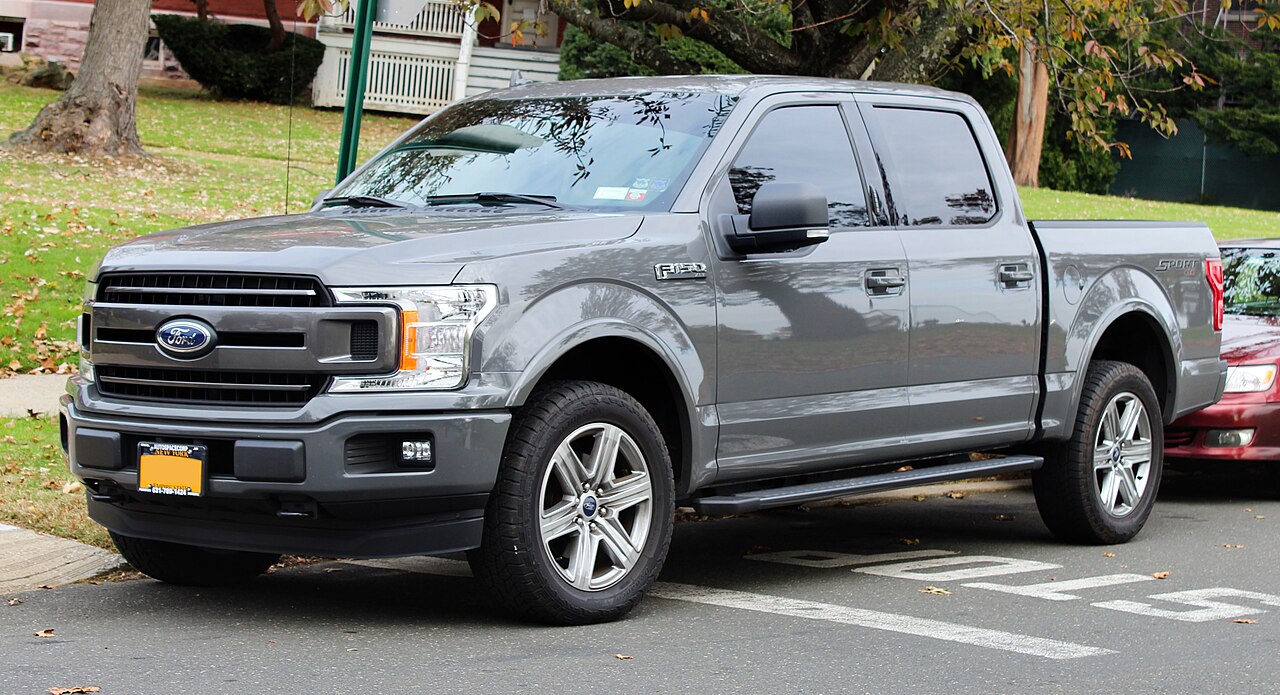
For more than seven decades, the Ford F-Series has stood as the best-selling motor vehicle in the United States. While chassis engineering, high-strength aluminum body panels, and cabin technology have evolved substantially, the central debate among full-size pickup truck buyers centers squarely under the hood: Ford's twin-turbocharged EcoBoost V6 powertrains versus the naturally aspirated 5.0-liter Coyote V8.
When Ford introduced the first-generation 3.5L EcoBoost into the F-150 for the 2011 model year, traditional truck buyers questioned whether a twin-turbocharged six-cylinder could endure the severe mechanical duty cycles demanded by commercial fleet operators, boat haulers, and construction trades.
Fast-forward through more than a decade of real-world operational data:
- The EcoBoost family (comprising the 2.7L Nano V6 and 3.5L D35 V6) has achieved dominant market share, delivering massive low-end torque curves that peak as low as 3,000 RPM, ideal for heavy trailer towing and high-altitude mountain driving.
- The 5.0-liter Coyote V8 remains the champion of mechanical simplicity, high-RPM acoustic refinement, and traditional naturally aspirated durability, completely devoid of high-heat turbochargers, intercoolers, and wastegate actuators.
This technical engineering analysis examines block metallurgy, fuel delivery systems, cam phaser timing architectures, real-world towing stress, and verified 200,000-mile reliability across both legendary Ford truck powertrains.
Side-by-Side Powertrain Architecture Matrix: EcoBoost vs. Coyote V8
The comparative engineering matrix below analyzes verified factory specifications across current production variants of Ford's flagship truck engines:
| Engineering Parameter | 2.7L EcoBoost Nano V6 | 3.5L EcoBoost V6 (Gen 2) | 5.0L Coyote V8 (Gen 4) |
|---|---|---|---|
| Engine Architecture | 60° Twin-Turbocharged V6 | 60° Twin-Turbocharged V6 | 90° Naturally Aspirated V8 |
| Engine Block Metallurgy | Compacted Graphite Iron (CGI) | High-Strength Cast Aluminum | Cast Aluminum (PTWA Bore Spray) |
| Displacement (cc / cu in) | 2,720 cc (166 cu in) | 3,496 cc (213 cu in) | 5,038 cc (307 cu in) |
| Bore x Stroke (mm) | 83.0 mm x 83.0 mm (Square) | 92.5 mm x 86.7 mm | 93.0 mm x 92.7 mm |
| Compression Ratio | 10.0:1 | 10.5:1 | 12.0:1 |
| Fuel Delivery System | Dual PFDI (Direct + Port) | Dual PFDI (Direct + Port) | Dual PFDI (Direct + Port) |
| Aspiration / Boost Level | Parallel Twin-Scroll (~16–18 psi) | Parallel BorgWarner (~15–18 psi) | Naturally Aspirated (Atmospheric) |
| Horsepower @ RPM | 325 hp @ 5,000 RPM | 400 hp @ 6,000 RPM | 400 hp @ 6,000 RPM |
| Torque @ RPM | 400 lb-ft @ 3,000 RPM | 500 lb-ft @ 3,100 RPM | 410 lb-ft @ 4,250 RPM |
| Max F-150 Towing Rating | 10,100 lbs | 13,500 lbs (Class-Leading) | 13,000 lbs |
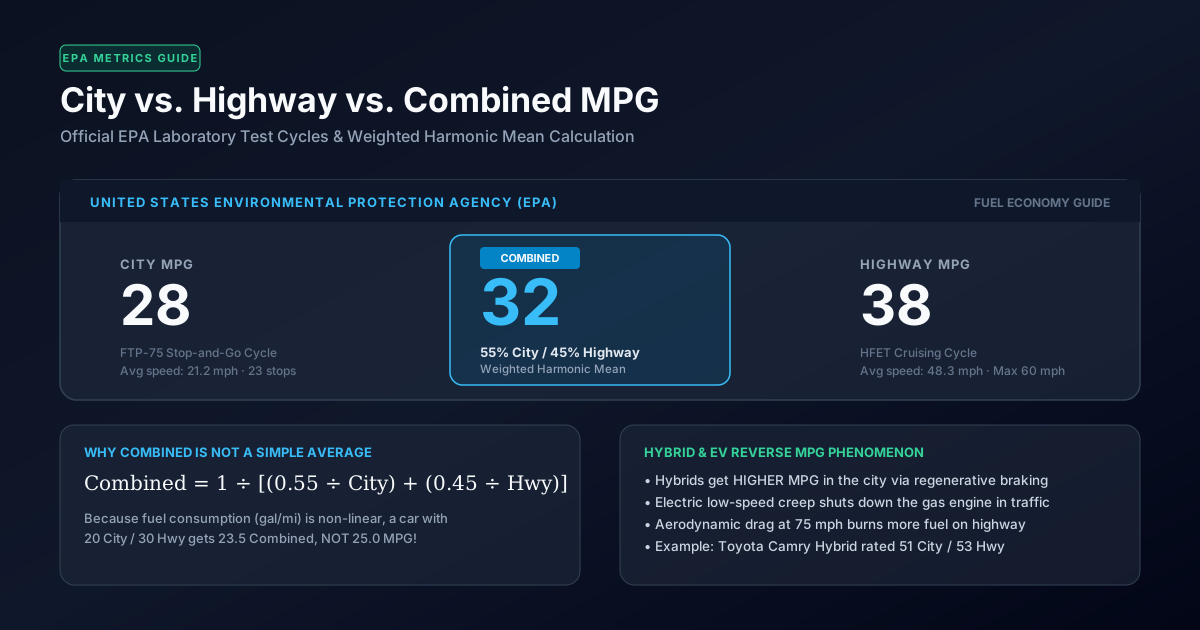
| EPA Fuel Economy (Comb) | 21 MPG (20 City / 26 Hwy) | 20 MPG (18 City / 24 Hwy) | 19 MPG (17 City / 24 Hwy) |
Metallurgical Foundations: Compacted Graphite Iron vs. Cast Aluminum Blocks
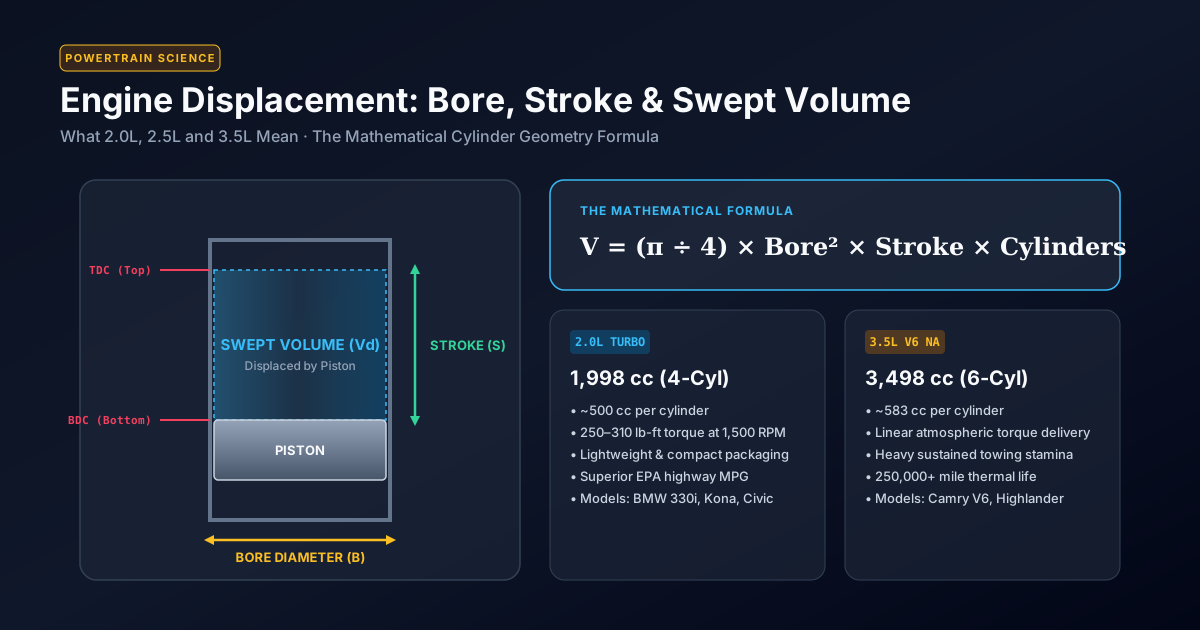
The underlying longevity of any internal combustion engine starts with the structural integrity of its crankcase. To explore how engine displacement and cylinder dimensions dictate combustion forces, read our guide on Engine Displacement Explained.
1. The 2.7L EcoBoost: Diesel-Grade CGI Engineering
Often overlooked by truck buyers, the 2.7L EcoBoost "Nano" features the most exotic metallurgy of any gasoline engine in Ford's catalog. The upper engine cylinder block is cast from Compacted Graphite Iron (CGI)—the exact same high-tensile material Ford utilizes in its 6.7-liter Power Stroke diesel V8. CGI offers 75% higher tensile strength and 45% greater stiffness than conventional grey cast iron, allowing the block to withstand tremendous peak cylinder combustion pressures without cylinder bore distortion.
2. The 3.5L EcoBoost: Deep-Skirt Cast Aluminum
The larger 3.5L EcoBoost utilizes a deep-skirt aluminum alloy block with six-bolt cross-bolted main bearing caps and pressed-in cast-iron cylinder liners. Because the 3.5L produces an enormous 500 lb-ft of torque at an accessible 3,100 RPM, the crankshaft is forged from micro-alloyed steel, supported by high-strength piston connecting rods with fractured-cap mating surfaces.
3. The 5.0L Coyote V8: Quad-Cam High-Flow Architecture
The 5.0-liter Coyote V8 represents the pinnacle of modern naturally aspirated multi-valve V8 engineering. Built on a 90-degree aluminum block, modern Gen 3 and Gen 4 Coyote engines discarded traditional pressed-in iron cylinder liners in favor of Plasma Transferred Wire Arc (PTWA) thermal spray technology. PTWA deposits a micro-thin, ultra-hard iron coating onto the aluminum cylinder walls, shedding 8.5 lbs while improving heat dissipation to the cylinder head cooling jackets.
Induction & Fuel Delivery: Dual-Injection PFDI Eliminates Carbon Deposits
Early direct-injection (GDI) combustion engines across the global automotive industry suffered from a notorious vulnerability: intake valve carbon buildup. Because direct fuel injectors spray fuel directly into the combustion chamber rather than upstream across the intake valves, the cleaning detergents present in commercial pump gasoline never wash over the back of the intake valves. Over 60,000 to 100,000 miles, crankcase oil vapors from the PCV system bake onto hot intake valve stems, restricting airflow and causing engine hesitation.
Beginning in the 2017 model year for the 3.5L EcoBoost and 2018 for the 2.7L EcoBoost and 5.0L Coyote, Ford completely cured this design flaw across all truck engines by introducing Port Fuel and Direct Injection (PFDI):
- At idle and low-load highway cruising, the engine fires low-pressure port injectors, spraying gasoline directly over the intake valve backs and keeping them surgically clean for the life of the engine.
- Under heavy throttle and towing acceleration, the high-pressure direct injectors (operating at up to 2,900 psi) deliver atomized fuel into the combustion bowl for instantaneous knock resistance and maximum thermal efficiency.
The Critical Lifespan Vulnerabilities: Known Teardown Failure Modes
When auditing engines for long-term 200,000+ mile reliability, mechanical engineers look at specific component fatigue limits:
1. EcoBoost Vulnerability: Cam Phaser Rattles & Timing Chain Slack
The most prevalent mechanical issue on second-generation EcoBoost engines involves the Variable Cam Timing (VCT) phasers. Over high mileage, the internal locking pins inside the phasers can wear down, resulting in a distinct 2-to-5-second rattling noise upon cold startup before oil pressure builds.
- The Root Cause: EcoBoost engines operate with high turbocharger heat and substantial fuel dilution if subjected to frequent short, cold-start city trips. When owners extend oil change intervals past 5,000–7,000 miles, degraded oil breaks down hydraulic phaser solenoids and stretches the extensive dual timing chains.
- The Prevention: Adhering strictly to 5,000-mile synthetic oil change intervals with factory Motorcraft FL-500S filters drastically mitigates cam phaser failure.
2. 5.0L Coyote Vulnerability: PTWA Oil Consumption & Cylinder Deactivation
Early Gen 3 (2018–2020) Coyote V8s experienced customer complaints regarding excessive engine oil consumption (up to 1 quart per 1,500 miles). Ford resolved this through updated PCM calibration software that reduced high intake manifold vacuum during deceleration and revised PCV oil separator baffles.
- Furthermore, beginning with the 2021 model year, Ford equipped the Gen 4 Coyote with Variable Displacement Engine (VDE) cylinder deactivation, which shuts off valves on four cylinders during light-load cruising. While beneficial for EPA fuel economy, cylinder deactivation introduces complex hydraulic collapsing roller lifters that represent an additional moving wear item compared to older, simpler Coyote engines.
3. Turbocharger Thermal Cycles & Coolant Line Fittings
EcoBoost turbochargers are both water-cooled and oil-lubricated. However, the small plastic quick-connect coolant fittings located at the back of the cylinder heads can become brittle after 100,000 miles of severe heat cycles, potentially causing minor coolant seepage that requires manifold removal to replace.
Towing Under Heavy Load: Low-End Torque Plateau vs. High-RPM V8 Powerband
The fundamental difference between EcoBoost and Coyote becomes immediately obvious when hitching a 7,000 to 10,000-pound travel trailer or horse trailer:
- The 3.5L EcoBoost Advantage: Produces 500 lb-ft of torque at just 3,100 RPM, with over 90% of peak torque available from 2,000 to 5,000 RPM. When ascending steep 6% mountain highway grades under full load, the EcoBoost's twin turbochargers generate immediate manifold boost, allowing the truck to hold 6th or 7th gear at a quiet 2,200 to 2,500 RPM. Furthermore, turbocharged engines suffer virtually zero horsepower loss at high elevations, as the electronic wastegates simply command higher turbine speeds to compensate for thinner mountain air.
- The 5.0L Coyote Characteristic: As a naturally aspirated engine, the Coyote must rev to generate force. Peak torque (410 lb-ft) does not arrive until 4,250 RPM, and peak horsepower requires spinning to 6,000 RPM. When pulling a heavy trailer up an incline, the 10-speed transmission must downshift to 3rd or 4th gear, revving the engine past 4,500 RPM with substantial cabin engine noise. Additionally, the Coyote loses approximately 3% of its power for every 1,000 feet of elevation above sea level.
For deeper insights into automatic gearbox durability under towing stress, explore our guide to Transmission Types: Automatic vs. Dual-Clutch vs. CVT.
200,000-Mile Longevity Blueprint: Which Engine Lasts Longer?
- If your mission is 200,000+ miles with minimal mechanical complexity: The 5.0-liter Coyote V8 holds the edge for ultra-long-term fleet durability. Without turbochargers, intercoolers, vacuum lines, high-pressure charge pipes, and exhaust manifold heat stress, the Coyote is simpler to diagnose and repair as a vehicle crosses 15 years of age.
- If your mission is towing heavy loads and effortless highway passing: The 3.5L EcoBoost is the superior truck engine. Its immense low-end torque protects the transmission from constant gear hunting and reduces engine strain at lower operating RPMs.
- The Dark Horse Champion: For daily commuting and light towing under 7,500 lbs, the 2.7L EcoBoost with its bulletproof Compacted Graphite Iron block routinely surpasses 250,000 miles with exceptional reliability when maintained with regular synthetic fluid services.
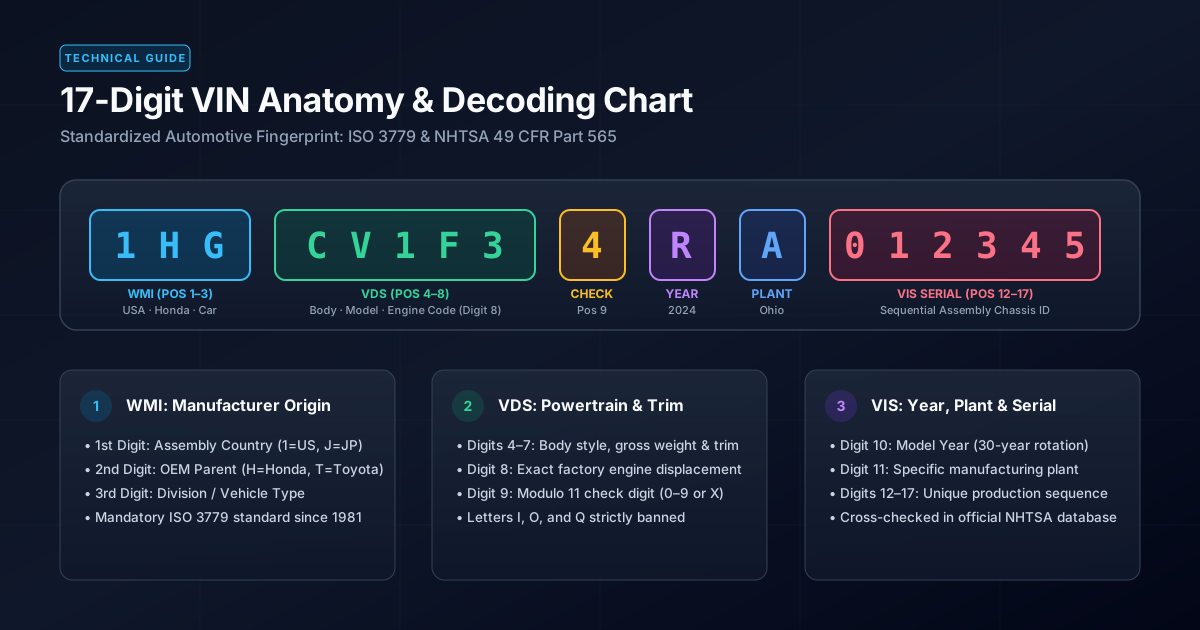
Before purchasing any used Ford F-150, always audit original factory engine codes, axle gear ratios, and open NHTSA recall histories using our free 17-Digit VIN Number Decoder.
Purchasing Verdict: Which Ford Truck Engine Should You Choose?
- Choose the 5.0L Coyote V8: If you crave the classic rumble of an American V8, prioritize long-term mechanical simplicity, do mostly unloaded highway commuting, and prefer to keep your truck for 15+ years past warranty expiration.
- Choose the 3.5L EcoBoost V6: If you regularly tow heavy campers, boats, or equipment trailers over 7,500 lbs, drive through mountainous high-altitude terrain, and demand maximum low-RPM towing muscle.
- Choose the 2.7L EcoBoost V6: If you want the lowest ownership costs, diesel-grade CGI block durability, and the best everyday city and highway fuel economy of any non-hybrid full-size truck.
Frequently asked questions
Which Ford F-150 engine lasts longer: EcoBoost or 5.0L Coyote V8?
For fleet operators keeping trucks beyond 15 years and 250,000 miles, the naturally aspirated 5.0L Coyote V8 offers greater simplicity due to the absence of turbochargers and high-pressure intercooler plumbing. However, for towing and daily utility, both the 2.7L and 3.5L EcoBoost routinely exceed 200,000 miles when maintained with 5,000-mile synthetic oil changes.
Does the Ford EcoBoost have carbon buildup on the intake valves?
No. While early 2011–2016 first-generation EcoBoost engines were direct-injection only and suffered from carbon deposits, all modern EcoBoost engines (since 2017/2018) feature dual Port and Direct Fuel Injection (PFDI). The port injectors wash fuel detergents over the intake valves, keeping them clean permanently.
Why is the 3.5L EcoBoost better for towing than the 5.0L V8?
The 3.5L EcoBoost produces 500 lb-ft of torque at just 3,100 RPM, allowing it to pull heavy trailers up highway grades without frequent downshifting. The Coyote V8 produces 410 lb-ft at a higher 4,250 RPM, requiring high engine revs and gear-hunting on steep inclines.
What causes cam phaser rattles on Ford EcoBoost engines?
Cam phaser rattle upon cold startup is typically caused by worn internal locking pins within the Variable Cam Timing (VCT) phaser sprockets, often exacerbated by extended oil change intervals that degrade hydraulic solenoids.
Is the 2.7L EcoBoost reliable?
Yes. The 2.7L EcoBoost Nano V6 is regarded by many automotive mechanics as Ford's most durable gasoline engine because its block is constructed from Compacted Graphite Iron (CGI)—the same material used in heavy-duty commercial diesel engines.
Cite this page: https://cardataindex.com/blog/ford-ecoboost-vs-coyote-v8-truck-engine-comparison
Keep researching
Cross-check the numbers in this guide against live factory data in our specification index or decode a specific car with the free VIN decoder.