Compact Off-Road Crossovers: Subaru Forester Wilderness vs. Toyota RAV4 TRD vs. Ford Bronco Sport Badlands
Trail-ready compact crossover showdown: Subaru dual-function X-Mode vs. Toyota Dynamic Torque Vectoring vs. Ford twin-clutch rear drive unit trail crawl benchmark.
Technical Data Desk
Automotive data desk · Sources: NHTSA · EPA · OEM records
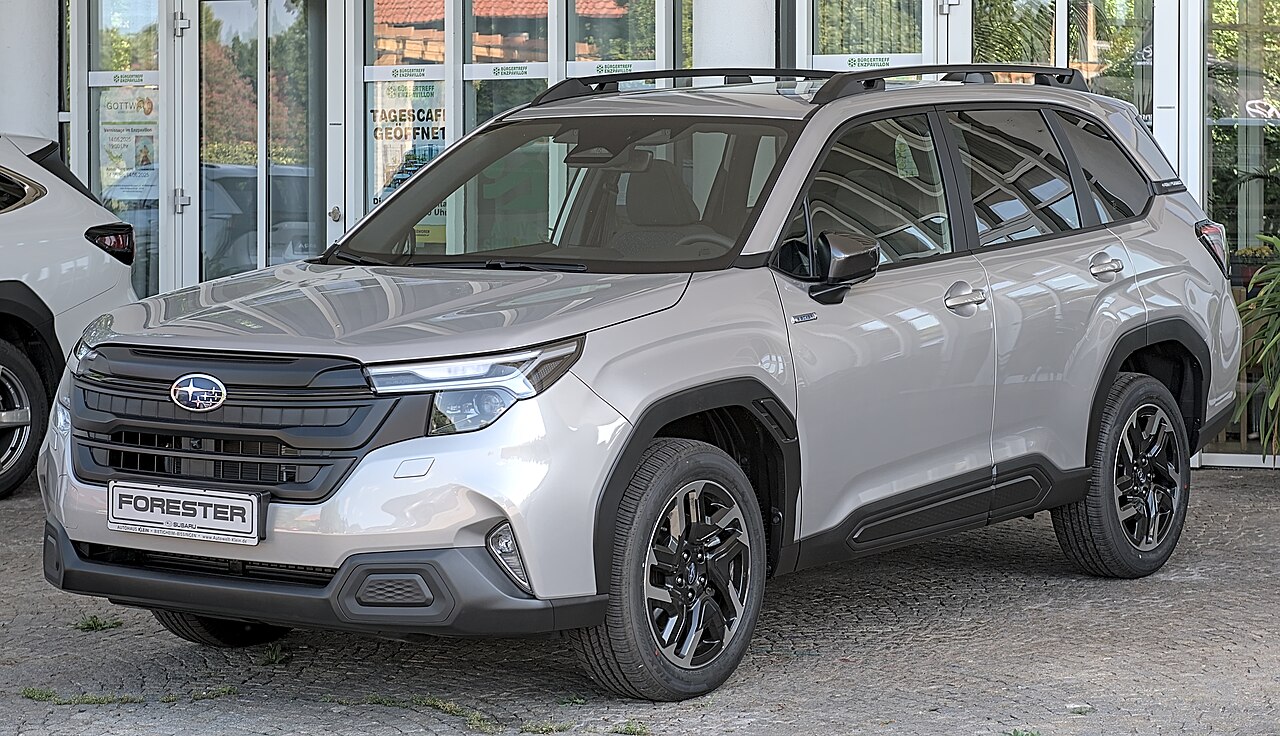
The compact crossover segment has evolved far beyond benign grocery-hauling suburban runabouts. Driven by the explosive growth of outdoor recreation and overland touring, automakers have engineered dedicated trail-ready variants of their top-selling unibody platforms: the Subaru Forester Wilderness, the Toyota RAV4 TRD Off-Road, and the Ford Bronco Sport Badlands.
These vehicles promise genuine back-country capability: conquering rocky fire roads, deep snowdrifts, and rutted mountain switchbacks without sacrificing 28+ MPG highway fuel economy, whisper-quiet cabin acoustics, or everyday commuter civility.
However, beneath the matte-black body cladding, aggressive all-terrain tires, and copper-accented recovery points lie radically different mechanical all-wheel-drive architectures, suspension kinematics, and thermal limits.
This technical engineering analysis audits chassis geometry, all-wheel-drive torque distribution, crawl ratios, powertrain durability, and real-world trail failure modes across all three trail crossovers.
1. Architectural Foundations & Trail Geometry
Before examining all-wheel-drive electronics, physical geometry dictates whether a crossover can clear a boulder or will tear off its front valence.
Trail Geometry Benchmark:
* Subaru Forester Wilderness (Subaru Global Platform): Raised suspension geometry increases ground clearance from 8.7 to 9.2 inches (234 mm). Longer coil springs and re-valved dampers preserve suspension compliance while protecting critical driveline components.
* Toyota RAV4 TRD Off-Road (TNGA-K Architecture): Features custom red internal-rebound coil springs with revised valving, sitting at 8.6 inches (218 mm) of ground clearance.
* Ford Bronco Sport Badlands (Ford C2 Platform): Built with unique high-clearance off-road suspension (HOSS) featuring 46mm monotube rear dampers, achieving 8.8 inches (224 mm) of ground clearance and ultra-short front/rear body overhangs.
Off-Road Angular Clearance Comparison
In true off-road terrain, approach angle (?app) determines whether a vehicle can begin climbing an obstacle without smashing its bumper, breakover angle (?brk) dictates whether the center chassis high-centers over a rock ridge, and departure angle (?dep) prevents the rear bumper and exhaust tips from scraping during steep descents.
| Trail Dimensional Metric | Subaru Forester Wilderness | Toyota RAV4 TRD Off-Road | Ford Bronco Sport Badlands |
|---|---|---|---|
| Ground Clearance | 9.2 in / 234 mm | 8.6 in / 218 mm | 8.8 in / 224 mm |
| Approach Angle (Degrees) | 23.5° | 19.0° | 30.0° (Best in Class) |
| Breakover Angle (Degrees) | 21.0° | 19.5° | 21.7° |
| Departure Angle (Degrees) | 25.4° | 21.0° | 33.1° (Best in Class) |
| Curb Weight | 3,620 lbs (1,642 kg) | 3,655 lbs (1,658 kg) | 3,707 lbs (1,681 kg) |
| Factory Tire Model | Yokohama Geolandar A/T G015 | Falken WILDPEAK A/T Trail | Falken WILDPEAK A/T |
| Tire Dimensions | 225/65R17 | 225/60R18 | 235/65R17 (Widest) |
| Full-Size Matching Spare | Yes (Mounted under cargo floor) | Temporary Space-Saver | Yes (Full-size matching) |
| Skid Plate Protection | Aluminum Engine & Steel Rear Diff | Stamped Steel Front Skid | 4x Steel Bash Plates |
2. All-Wheel-Drive Mechanical Architectures Audited
The critical technical differentiator between these three trail crossovers is how each transfers torque to the wheels with traction when opposite wheels are suspended in mid-air:
Subaru Symmetrical AWD: Active Torque Split with Dual-Function X-Mode
Subaru mounts its longitudinally configured Flat-4 Boxer engine in-line with the Lineartronic continuously variable transmission (CVT). Power flows straight into an Active Torque Split (ATS) multi-plate wet clutch pack integrated into the transmission tail housing.
Subaru Torque Management Mechanics:
* Nominal Torque Split: Maintains an active mechanical 60% front / 40% rear baseline torque distribution. As steering angle and throttle demand change, hydraulic pressure modulates the clutch pack to shift power up to 50/50.
* Open Differentials: Both front and rear axles utilize traditional open bevel differentials. Cross-axle wheelspin is managed by the Vehicle Dynamics Control (VDC) applying selective ABS hydraulic braking to the spinning wheel, forcing torque through the differential spider gears to the wheel with grip.
* Dual-Function X-Mode: Wilderness models feature a dedicated "Deep Snow / Mud" setting that disengages throttle-cutting algorithms. This allows the FB25 engine to rev freely, enabling spinning tires to clear mud from their tread grooves to find underlying rock.
Toyota Dynamic Torque Vectoring AWD with Rear Driveline Disconnect
The RAV4 TRD Off-Road uses a transverse front-drive transaxle paired with Toyota's Dynamic Torque Vectoring (DTV) rear drive system:
- Highway Fuel Efficiency: On paved roads, two electro-hydraulic dog clutches disconnect the central propshaft completely, reducing parasitic drag and turning the RAV4 into a 100% front-wheel-drive vehicle.
- Trail Engagement: When slippage is detected, the front dog clutch engages the propeller shaft, sending up to 50% of engine torque rearward.
- Dual Rear Clutch Packs: Instead of an open rear differential, the rear axle contains two individual electro-mechanical clutch packs on each half-shaft. By pulsing clutch clamping pressure, the system can send up to 100% of available rear torque to the left or right rear wheel, providing genuine active mechanical vectoring across the rear axle.
Ford Bronco Sport Badlands: Transverse Twin-Clutch with Rear Differential Lock
The Bronco Sport Badlands features the most mechanically aggressive driveline in the compact crossover category: an advanced GKN Twinster twin-clutch rear drive unit (RDU).
Ford Twinster Differential Mechanics:
* Mechanical Rear Locker Emulation: The RDU contains two hydraulically actuated multi-plate wet clutch packs flanking a central ring gear. When the driver presses the "Rear Locker" button on the center console, high-pressure hydraulic fluid locks both clutch packs at maximum clamping force.
* Zero-Slip Cross-Axle Lock: Both rear half-shafts are mechanically locked to spin at identical rotational speed, completely eliminating the need for brake-based traction intervention across the rear axle. Even with one rear tire hanging 18 inches off the ground, 100% of available rear axle torque propels the grounded wheel.
* G.O.A.T. Modes: Includes specialized "Mud/Ruts" and "Rock Crawl" drive modes that pre-charge hydraulic pressure and hold lower transmission gears.
3. Powertrain Benchmarking, Crawl Ratios & Thermal Endurance
Trail climbing demands low-RPM torque, aggressive gear multiplication, and robust transmission oil cooling:
Low-Speed Crawl Ratio Formula:
Crawl Ratio = Transmission 1st Gear × Transfer Case Low Ratio × Final Drive Ratio
Because none of these vehicles possess a true two-speed transfer case (low-range ratio = 1.0:1), engineers rely on transmission gearing to simulate crawling torque:
| Powertrain Metric | Subaru Forester Wilderness | Toyota RAV4 TRD Off-Road | Ford Bronco Sport Badlands |
|---|---|---|---|
| Engine Configuration | 2.5L Naturally Aspirated Boxer-4 | 2.5L Dynamic Force Inline-4 | 2.0L EcoBoost Turbocharged I4 |
| Horsepower @ RPM | 182 hp @ 5,800 RPM | 203 hp @ 6,600 RPM | 250 hp @ 5,500 RPM |
| Torque @ RPM | 176 lb-ft @ 4,400 RPM | 184 lb-ft @ 5,000 RPM | 277 lb-ft @ 3,000 RPM |
| Transmission Type | Lineartronic CVT w/ 8-speed manual | 8-Speed Direct Shift Automatic | 8-Speed SelectShift Automatic |
| Lowest Forward Gear Ratio | 3.60:1 (CVT pulley low) | 5.25:1 (1st gear) | 4.69:1 (1st gear) |
| Final Drive Ratio | 4.111:1 (Wilderness Specific) | 3.177:1 | 3.81:1 |
| Simulated Trail Crawl Ratio | 18.2:1 | 16.7:1 | 17.9:1 |
| 0–60 mph Acceleration | 8.5 seconds | 8.2 seconds | 6.5 seconds (Dominant) |
| EPA City / Highway / Combined | 25 / 28 / 26 MPG | 25 / 32 / 28 MPG | 21 / 26 / 23 MPG |
| Max Towing Capacity | 3,000 lbs (1,361 kg) | 3,500 lbs (1,588 kg) | 2,200 lbs (998 kg) |
4. Trail Failure Modes & Real-World Vulnerabilities
Pushing unibody crossovers beyond graded gravel roads exposes distinct mechanical vulnerabilities:
1. CVT Belt Slip & Hydraulic Thermal Limp Mode (Subaru)
While the Forester Wilderness features an auxiliary oil-to-air transmission cooler, continuously variable transmissions rely on metal push-belts clamped between hydraulically actuated conical pulleys. Under prolonged high-load churning through deep sand:
- Fluid temperatures spike above 120°C (248°F).
- To prevent catastrophic belt slippage, the transmission control module commands a severe power derate, leaving the driver unable to climb steep dunes until the CVT cools down.
2. Multi-Plate Clutch Pack Overheating (Toyota & Ford)
Both Toyota's Dynamic Torque Vectoring and Ford's GKN rear drive unit utilize wet clutch packs to transfer torque. Continuous diagonal articulation forces these clutches to slip repeatedly:
- Internal thermal sensors detect clutch oil overheating around 135°C (275°F).
- The vehicle displays an "AWD System Overheated / Temporarily Unavailable" dashboard warning and uncouples the rear axle, stranding the crossover in front-wheel drive until cooled.
3. Suspension Articulation & Strut Over-Extension
Unlike solid-axle off-roaders with 12+ inches of wheel travel, these crossovers have limited independent wheel articulation:
- Ramp Travel Index (RTI): Scores hover between 280 and 340 on a 20-degree ramp.
- When descending large rock ledges, the front MacPherson struts can top out violently against internal rebound stops, producing alarming mechanical clunks and risking strut seal damage.
5. Five-Year Maintenance & Ownership Cost Profile
Operating a crossover on washboard dirt trails and rocky river crossings alters regular maintenance schedules:
| 5-Year Trail Maintenance Protocol | Subaru Forester Wilderness | Toyota RAV4 TRD Off-Road | Ford Bronco Sport Badlands |
|---|---|---|---|
| Engine Oil Service (Severe Duty) | 5,000 mi (0W-20 Synthetic) | 5,000 mi (0W-16 Synthetic) | 5,000 mi (5W-30 Synthetic) |
| Differential / RDU Fluid Flushes | 30,000 mi (Front & Rear) | 30,000 mi (Front, Transfer, Rear) | 30,000 mi (Dual RDU chambers) |
| Transmission Fluid Replacement | 36,000 mi (Subaru High-Torque CVT) | 60,000 mi (Toyota WS ATF) | 45,000 mi (Motorcraft ULV) |
| Air Filter Replacement (Trail Dust) | Every 10,000 miles | Every 10,000 miles | Every 10,000 miles |
| Average 5-Year Maintenance Cost | $3,800 | $3,400 (Lowest) | $4,400 |
6. The Verdict: Selecting Your Ultimate Trail Crossover
Each contender fulfills a distinct overland lifestyle:
- Choose the Subaru Forester Wilderness if: Maximum ground clearance (9.2 inches), legendary panoramic greenhouse visibility, and deep snow/mud traction are your priorities. The Forester offers the most compliant highway ride, the lowest center of gravity, and an unmatched roof rack dynamic load rating (800 lbs static) designed for rooftop tents.
- Choose the Toyota RAV4 TRD Off-Road if: Unquestioned long-term mechanical reliability, 3,500 lbs towing capacity, and 32 MPG highway fuel economy matter most. The RAV4 is the sensible road-trip champion that effortlessly handles fire roads and camping trails.
- Choose the Ford Bronco Sport Badlands if: You demand genuine off-road rock-climbing performance and muscle car acceleration. With its 250-hp turbo engine, true mechanical rear differential locker, short overhangs, and rugged heritage design, the Badlands is the only crossover capable of following modified 4x4s into technical backcountry terrain.
Frequently asked questions
Which compact crossover is best for actual off-road rock crawling?
The Ford Bronco Sport Badlands is the most capable rock crawler in the compact crossover segment. Unlike the Subaru and Toyota which rely primarily on brake-based traction control to stop spinning wheels, the Bronco Sport Badlands features a mechanical twin-clutch rear differential lock that physically locks both rear wheels together at equal speed. Combined with its short front bumper overhang (30.0-degree approach angle) and 8.8 inches of ground clearance, it climbs loose scree and crosses deep diagonal ruts with zero wheelspin.
How does Subaru Dual-Function X-Mode work in deep snow and mud?
Standard Subaru X-Mode maintains active traction control, which cuts engine throttle if wheels slip. Dual-Function X-Mode (featured on the Forester Wilderness and Sport) adds a second 'Deep Snow / Mud' setting. This mode deliberately disables throttle reduction and alters the ABS brake pulse timing, allowing the wheels to spin up and paddle away thick slush or mud until the tires locate bedrock traction below.
Can the Subaru Forester Wilderness tow as much as the Toyota RAV4 TRD Off-Road?
No, but it bridges the gap significantly. The standard Forester is rated to tow just 1,500 lbs. For the Wilderness, Subaru installed an auxiliary transmission oil cooler, beefed-up rear subframe mounts, and an upgraded variable-displacement oil pump, raising towing capacity to 3,000 lbs. The Toyota RAV4 TRD Off-Road remains slightly higher at 3,500 lbs courtesy of its dedicated heavy-duty radiator and high-pressure transmission oil circuit.
Do these crossovers have real low-range 4-wheel drive (4-Low)?
No. None of these compact crossovers have a traditional two-speed transfer case with a mechanical 4-Low gear reduction like a Jeep Wrangler, Toyota 4Runner, or Ford Bronco. Instead, they simulate low-speed rock crawling electronically and through final drive gear reductions. The Forester Wilderness lowers its final drive ratio from 3.70:1 to 4.111:1, and the Bronco Sport Badlands utilizes a low 4.69:1 first-gear ratio combined with electronic hill descent control.
What are the biggest maintenance issues with trail-oriented compact crossovers?
The most common trail-induced maintenance issues include: 1) Overheated AWD clutch packs caused by continuous wheel slip in deep sand or gravel, which triggers an instrument cluster warning and temporarily disengages AWD into FWD mode; 2) CV axle boot tears from trail sticks and rocks; 3) Premature rear differential and CVT fluid thermal degradation, necessitating fluid replacement every 30,000 miles rather than the normal 60,000-mile highway schedule.
Cite this page: https://cardataindex.com/blog/compact-off-road-crossovers-forester-vs-rav4-trd-vs-bronco-sport
Keep researching
Cross-check the numbers in this guide against live factory data in our specification index or decode a specific car with the free VIN decoder.