BMW 3 Series vs. 5 Series: CLAR Platform, B58 Engine & Daily Usability Compared
Direct BMW sports sedan comparison: 3 Series (G20) vs 5 Series (G60). Compare CLAR architecture, B48 vs B58 turbo engines, interior room, and xDrive performance.
Car Data Index Editorial Desk
Automotive data desk · Sources: NHTSA · EPA · OEM records
Executive Summary: Sports Sedan Agility vs. Executive Grand Touring
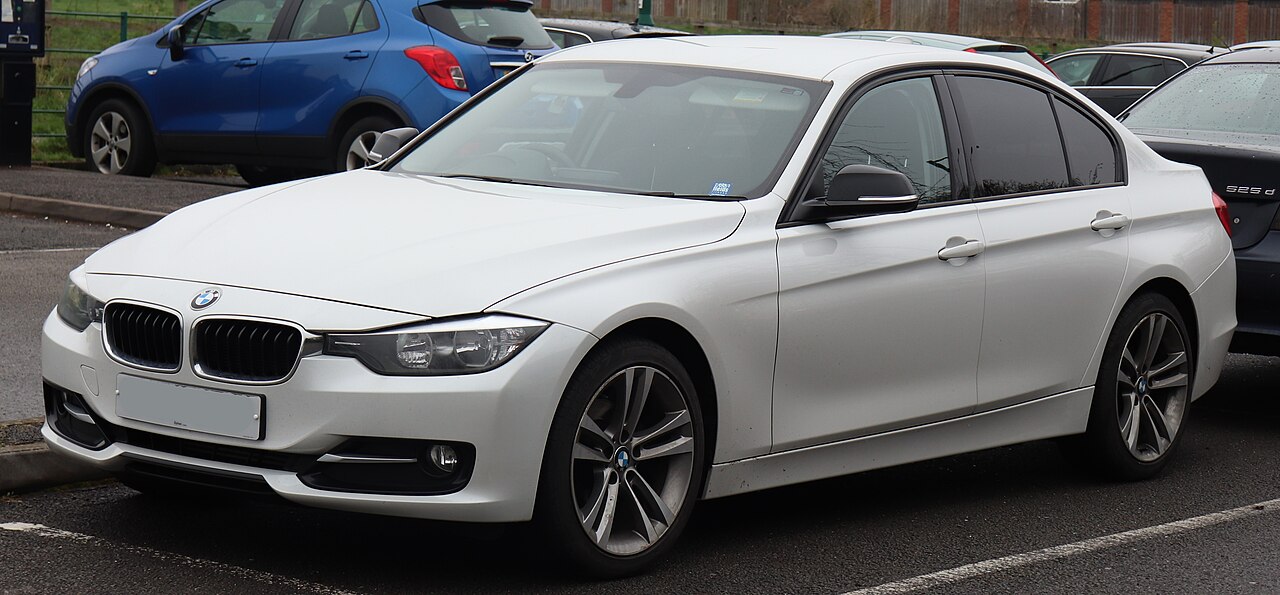
For more than four decades, Bayerische Motoren Werke has shaped the sports sedan landscape through two legendary engineering pillars: the BMW 3 Series and the BMW 5 Series. While the 3 Series has served as the universal benchmark for rear-wheel-drive athletic agility since the 1975 debut of the E21, the 5 Series (tracing its lineage to the 1972 E12) has defined the mid-size executive luxury segment, balancing Autobahn high-speed composure with limousine-class cabin comfort.
Today, both nameplates are engineered upon BMW's highly versatile CLAR (Cluster Architecture) modular platform. Buyers weighing a 3 Series (internal generation codes F30 and current G20) against a 5 Series (internal generation codes F10, G30, and current G60) are confronted with distinct automotive missions:
- The 3 Series (G20) is an agile, driver-centric sports sedan engineered for immediate directional changes, canyon carving, and effortless urban parking.
- The 5 Series (G30/G60) is an executive express built for effortless triple-digit highway cruising, supreme acoustic isolation, and prestigious client transportation.
This technical engineering comparison provides an exhaustive audit of platform architecture, engine foundries (B48 vs. the legendary B58), ZF 8-speed automatic transmission tuning, dimensional packaging, and long-term maintenance costs.
Side-by-Side Specification Matrix: Dimensions, Weights & Powertrains
The comparative engineering matrix below analyzes verified factory specifications across current production generations of the BMW 3 Series and BMW 5 Series:
| Specification Parameter | BMW 330i (G20) | BMW M340i xDrive (G20) | BMW 530i (G60) | BMW 540i xDrive (G60) |
|---|---|---|---|---|
| Vehicle Segment | Compact Sports Sedan | Compact Performance Sedan | Mid-Size Executive Sedan | Mid-Size Executive Performance |
| Overall Length (mm / in) | 4,713 mm (185.7 in) | 4,713 mm (185.7 in) | 5,060 mm (199.2 in) | 5,060 mm (199.2 in) |
| Overall Width (mm / in) | 1,827 mm (71.9 in) | 1,827 mm (71.9 in) | 1,900 mm (74.8 in) | 1,900 mm (74.8 in) |
| Wheelbase (mm / in) | 2,851 mm (112.2 in) | 2,851 mm (112.2 in) | 2,995 mm (117.9 in) | 2,995 mm (117.9 in) |
| Curb Weight (kg / lbs) | 1,605 kg (3,538 lbs) | 1,795 kg (3,957 lbs) | 1,815 kg (4,001 lbs) | 1,980 kg (4,365 lbs) |
| Trunk Cargo Space | 480 Liters (17.0 cu ft) | 480 Liters (17.0 cu ft) | 520 Liters (18.4 cu ft) | 520 Liters (18.4 cu ft) |
| Turning Circle (m / ft) | 11.4 m (37.4 ft) | 12.0 m (39.4 ft) | 12.3 m (40.4 ft) | 12.4 m (40.7 ft) |
| Internal Engine Code | B48B20O1 (2.0L Turbo I4) | B58B30O1 (3.0L Turbo I6) | B48B20O2 (2.0L Turbo + 48V) | B58B30M2 (3.0L Turbo + 48V) |
| Horsepower & RPM | 255 hp @ 5,000–6,500 | 382 hp @ 5,800–6,500 | 255 hp @ 4,700–6,500 | 375 hp @ 5,200–6,250 |
| Torque & RPM Range | 295 lb-ft @ 1,550–4,400 | 369 lb-ft @ 1,800–5,000 | 295 lb-ft @ 1,600–4,500 | 398 lb-ft @ 1,850–5,000 |
| Acceleration (0–100 km/h) | 5.6 seconds | 4.1 seconds | 5.9 seconds | 4.5 seconds |
| EPA Fuel Economy (Comb) | 29 MPG (25 City / 34 Hwy) | 26 MPG (23 City / 31 Hwy) | 30 MPG (27 City / 35 Hwy) | 28 MPG (26 City / 33 Hwy) |
Modular Structural Engineering: CLAR Architecture vs. Legacy F30/F10 Platforms
Both the current G20 3 Series and G60 5 Series are constructed on BMW's modular Cluster Architecture (CLAR). Engineered to accommodate longitudinal combustion engines, plug-in hybrids, and pure battery-electric powertrains on the same assembly lines, CLAR represents a massive metallurgical leap forward from previous generations:
- Torsional Rigidity: Compared to the prior sixth-generation BMW 3 Series (F30), the G20 CLAR structure increases overall body rigidity by 25%, with targeted areas like suspension strut mountings stiffened by up to 50%.
- Material Composition: CLAR combines hot-stamped high-strength steels, aluminum front shock towers, aluminum engine hoods, and extruded aluminum front fenders. This multi-material construction keeps the curb weight of the 330i down to approximately 3,538 lbs while maintaining BMW's trademark 50:50 front-to-rear axle weight distribution.
- The 5 Series Acoustic Advantage: In the 5 Series, CLAR is tuned specifically for high-speed acoustic decoupling. The front double-wishbone suspension and rear five-link axle feature elastokinematic hydraulic bushings and isolated rear subframe mountings that filter out coarse road surface vibrations before they reach the cabin floor.
For deeper insights into the complete Bavarian lineup and historical specifications, explore the BMW Technical Hub & Model Portfolio.
Engine Mechanics: The Agile B48 2.0L Turbo vs. The Benchmark B58 3.0L Inline-Six
BMW's modular B-engine family shares a standardized cylinder architecture: exactly 500cc of displacement per cylinder, an 82.0 mm cylinder bore, and a 94.6 mm piston stroke. To understand how cylinder displacement and stroke geometry dictate engine efficiency, review our guide on Engine Displacement Explained.
1. The B48 2.0-Liter Turbocharged Inline-4 (330i & 530i)
The B48 serves as the volume powertrain across BMW's international lineup. Constructed with a closed-deck aluminum cylinder block, thermally sprayed iron cylinder wall coatings, and BMW's Valvetronic fully variable valve lift system, the B48 generates 255 hp and 295 lb-ft of torque. Its compact physical footprint allows the engine to sit almost entirely behind the front axle centerline, creating a front-mid-engine balance that makes the 330i exceptionally eager on turn-in.
2. The Legendary B58 3.0-Liter Turbocharged Inline-6 (M340i & 540i)
Widely considered by independent automotive engineers as one of the finest combustion engines ever built, the B58 inline-six is famous for its smooth power delivery, robust internal components, and immense tuning overhead:
- Closed-Deck Crankcase: Unlike open-deck blocks used in mass-market vehicles, the B58's cylinder liners are fully supported by the aluminum casting at the cylinder head interface, providing extreme resistance to high combustion chamber pressures.
- Forged Crankshaft & Rods: Features a heavy-duty forged steel crankshaft counterbalanced across six cylinders, eliminating primary and secondary engine vibrations without requiring balance shafts.
- Twin-Scroll Turbocharging: A single twin-scroll turbocharger with divided exhaust manifolds routes exhaust pulses from cylinders 1-2-3 and 4-5-6 separately, spooling the turbine wheel almost instantaneously to deliver peak torque starting at an accessible 1,800 RPM.
- Toyota Engineering Verification: Demonstrating its supreme mechanical integrity, Toyota rigorously audited and selected the BMW B58 engine to power the fifth-generation GR Supra after subjecting it to grueling Japanese reliability validation schedules.
In current G60 540i and facelifted G20 models, the B58 is bolstered by a 48-volt mild-hybrid system. An electric motor integrated directly into the transmission housing provides an instant 147 lb-ft of electric torque off idle, smoothing auto start-stop cycles and filling the minute gap before boost builds.
Drivetrain Perfection: Why BMW Replaced Dual-Clutch DCTs with the ZF 8HP Automatic
During the late 2000s and 2010s, dual-clutch transmissions (DCTs) were prized for their ultra-rapid gear shifts. However, BMW has now phased out dual-clutch gearboxes across both standard and M performance sedans in favor of the ZF 8HP 8-speed torque-converter automatic transmission.
To compare the mechanical efficiency of different gearboxes, read our technical breakdown of Transmission Types: CVT vs Automatic vs DSG/DCT.
BMW's transition to the ZF 8HP was driven by three engineering realities:
- 1.Low-Speed Hydraulic Refinement: Dual-clutch gearboxes suffer from clutch shudder, slipping, and hesitation during slow-speed stop-and-go commuting and parallel parking maneuvers. The ZF torque converter provides seamless, buttery-smooth low-speed creep.
- 2.Shift Speed Parity: With modern Mechatronic electro-hydraulic valve bodies and lock-up torque converters that engage immediately after roll-off, the ZF 8HP executes full-throttle upshifts in just 150 to 200 milliseconds—matching dual-clutch shift times while handling significantly more torque.
- 3.Multi-Gear Downshifts: While dual-clutch transmissions can only pre-select adjacent gears (e.g., 6th to 5th), the planetary gearsets of the ZF 8HP can execute direct block downshifts (e.g., jumping directly from 8th gear to 3rd gear when the driver floors the accelerator on the highway).
Both sedans offer BMW's rear-biased xDrive all-wheel drive, which uses an electronically controlled multi-plate wet clutch in the transfer case to continuously distribute torque from 0:100 (pure rear-wheel drive) to 50:50 front-to-rear in milliseconds.
Cabin Ergonomics, Rear Seat Packaging & Trunk Usability
The physical dimensional difference between the 3 Series and 5 Series dictates distinct cabin environments:
- BMW 3 Series (G20): Tailored around the driver. The seating position is low, the steering wheel is thick-rimmed and upright, and the center console wraps tightly around the front occupants. Rear seat legroom measures 35.2 inches (894 mm), making it comfortable for children or average-sized adults on medium trips, though tall adults will find their knees brushing the front seatbacks. Trunk volume is a competitive 17.0 cubic feet (480 liters).
- BMW 5 Series (G60): Enters genuine executive limousine territory. Stretching over 16.6 feet (5,060 mm) in overall length, the 5 Series provides 36.5 to 37.5 inches of rear legroom, wider shoulder room, and thicker acoustic laminated window glass. The trunk provides 18.4 cubic feet (520 liters) of cargo space, easily accommodating four full-size golf bags or extended international luggage.
Long-Term Maintenance, Common Vulnerabilities & Plastic Cooling Component Longevity
When owning a modern German luxury sedan past its factory warranty period, prospective buyers must budget for specific engineering service requirements:
- Plastic Cooling System Components: Like many European automakers, BMW utilizes composite polyamide plastics for cooling components exposed to intense engine bay heat:
- Oil Filter Housing Gasket (OFHG) & Plastic Housing: Over 70,000 to 90,000 miles, heat cycles cause plastic oil filter housings and rubber gaskets to embrittle, potentially leading to oil-to-coolant contamination.
- Cylinder Head Coolant Vent Pipe: The small plastic vent line connecting the cylinder head to the coolant expansion tank becomes brittle with age. Preventive replacement every 60,000 miles is strongly advised.
- Transmission Fluid Service: While BMW claims transmission fluid is "lifetime", gearbox manufacturer ZF officially recommends draining and replacing the fluid and integrated pan-filter every 60,000 miles (100,000 km) to ensure solenoid longevity.
- PCV Valve Diaphragm: On higher-mileage B48 and B58 engines, the rubber crankcase ventilation diaphragm can tear, resulting in a distinct whistling noise at idle and oil consumption.
Before purchasing any pre-owned BMW sedan, always audit factory options, assembly plant origin, and open NHTSA safety recalls using our free 17-Digit VIN Number Decoder.
Generational Decision: Upgrading from F30 to G20 or F10 to G30/G60
For current BMW owners contemplating an upgrade:
- Upgrading from F30 (2012–2018) to G20 (2019+): The jump from the BMW 3 Series (F30) to the G20 resolves the primary criticism of the F30—its somewhat numb electronic power steering rack and floaty suspension damping. The G20 features innovative lift-related passive dampers, a stiffer front axle subframe, and substantially upgraded cabin material quality.
- Upgrading from F10 (2010–2016) to G30/G60: The G30 represented a major diet for the 5 Series, shedding up to 100 kg (220 lbs) through extensive use of aluminum and magnesium, restoring the athletic agility that made earlier 5 Series models legendary.
Purchasing Verdict: Which Bavarian Sedan Belongs in Your Driveway?
- Choose the BMW 3 Series: If you want a dynamic sports sedan that feels light on its feet, rewards aggressive driving on winding backroads, fits effortlessly into cramped urban parking spaces, and delivers 34+ MPG on the highway in 330i trim.
- Choose the BMW 5 Series: If you prioritize supreme ride plushness, whisper-quiet highway acoustic isolation for long business commutes, generous adult rear-seat legroom, and the commanding executive presence of a flagship luxury sedan.
Frequently asked questions
Is the BMW 3 Series or 5 Series better for daily driving?
For urban commuting and enthusiastic driving, the compact 3 Series is nimbler, easier to park, and more fuel-efficient. For long highway journeys and executive client transportation, the 5 Series provides superior acoustic insulation, smoother suspension compliance, and expanded rear-seat legroom.
How reliable is the BMW B58 inline-six engine?
The BMW B58 3.0L turbo inline-6—also chosen by Toyota for the GR Supra, is widely recognized by automotive engineers as one of the most durable modern German combustion engines, featuring a closed-deck aluminum block, forged steel crankshaft, and robust thermal management.
Why did BMW stop using dual-clutch (DCT) transmissions?
BMW phased out dual-clutch gearboxes in favor of the ZF 8HP torque-converter automatic because modern ZF 8-speed gearboxes execute shifts in just 150-200 milliseconds while eliminating low-speed clutch shudder, hesitation, and overheating in stop-and-go city traffic.
How does the BMW 3 Series F30 compare to the newer G20 generation?
The G20 generation features a 25% stiffer CLAR chassis, lift-related passive dampers for better body control, sharper steering precision, and significantly improved interior sound-deadening compared to the predecessor F30 generation.
Does BMW xDrive hurt fuel economy significantly?
No. Modern BMW xDrive utilizes an electronically controlled multi-plate clutch that drives the rear wheels during steady-state highway cruising, resulting in an EPA fuel economy penalty of only 1 to 2 MPG compared to rear-wheel-drive variants.
Cite this page: https://cardataindex.com/blog/bmw-sedans-compared-3-series-vs-5-series
Keep researching
Cross-check the numbers in this guide against live factory data in our specification index or decode a specific car with the free VIN decoder.