Mercedes-Benz Luxury SUVs: GLC vs. GLE (Sizes, Towing, 4MATIC & Interior Luxury)
Detailed Mercedes luxury SUV comparison: GLC vs GLE. Compare 4MATIC all-wheel drive, interior MBUX screens, towing capability, and ride comfort.
Car Data Index Editorial Desk
Automotive data desk · Sources: NHTSA · EPA · OEM records
Executive Summary: The Mercedes-Benz Luxury SUV Hierarchy
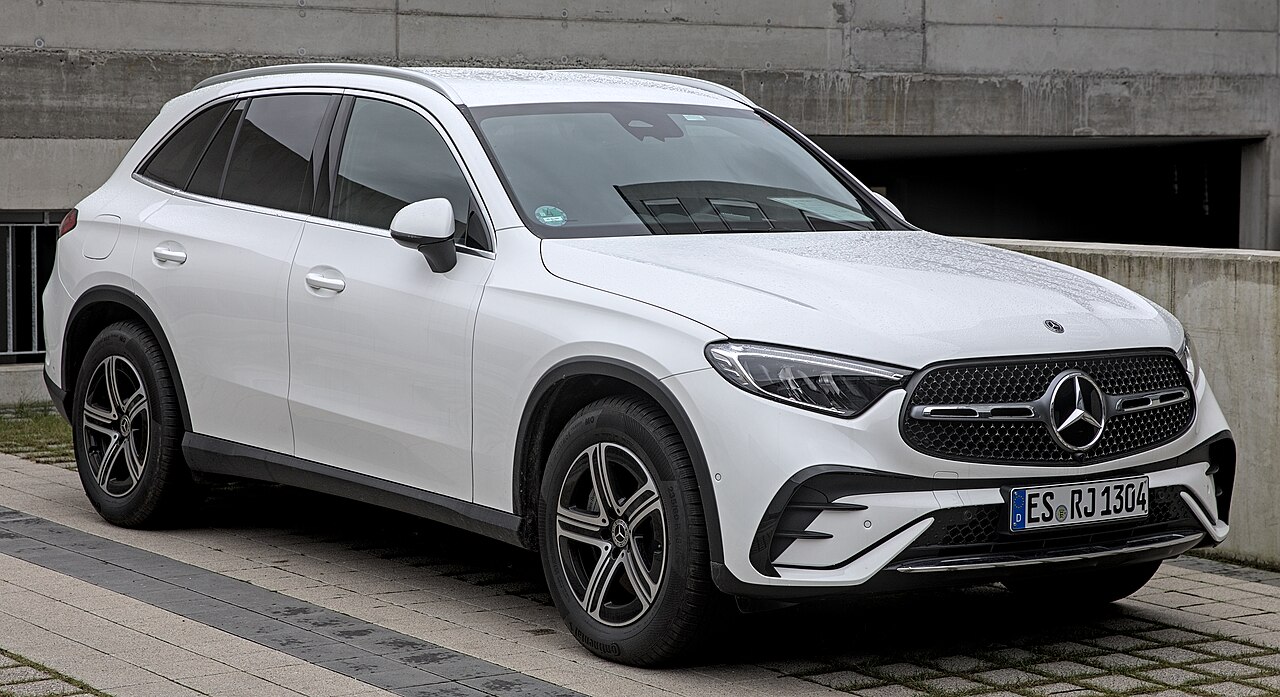
Within the luxury sport utility vehicle landscape, Mercedes-Benz maintains one of the most comprehensive model lineups in automotive history. However, for prospective luxury buyers stepping into the marque's core portfolio, the critical showroom decision almost invariably narrows down to two flagship nameplates: the compact **Mercedes-Benz GLC (X254) and the mid-size executive Mercedes-Benz GLE (W167)**.
While both crossovers showcase the iconic three-pointed star, unified modern "Sensual Purity" exterior design languages, and second-generation 48-volt Integrated Starter-Generator (ISG) mild-hybrid powertrains, their underlying engineering architectures serve fundamentally different vehicular missions:
- The **Mercedes-Benz GLC (X254)** is engineered on the agile MRA2 (Modular Rear Architecture) platform shared with the C-Class sedan. It emphasizes nimble urban maneuvering, class-leading aerodynamic efficiency ($C_d = 0.29$), sports-sedan steering precision, and an intimate, driver-focused cockpit.
- The **Mercedes-Benz GLE (W167)** is constructed on the heavy-duty MHA (Modular High Architecture) platform shared with the full-size GLS. It functions as an imposing multi-role executive workhorse, delivering optional three-row seven-passenger seating, an immense 7,700-pound maximum towing capacity, available turbocharged inline-six cylinder power, and optional AIRMATIC or 48V E-ACTIVE BODY CONTROL hydropneumatic suspension.
This comprehensive technical comparison audits structural chassis platforms, powertrain thermodynamics, 4MATIC mechanical all-wheel-drive configurations, interior volumetric ergonomics, and verified 100,000-mile maintenance failure modes across both Mercedes-Benz luxury benchmarks.
Side-by-Side Engineering Matrix: GLC vs. GLE
The comparative engineering matrix below analyzes verified factory specifications across standard US-market production variants of the Mercedes-Benz GLC 300 4MATIC, GLE 350 4MATIC, and GLE 450 4MATIC:
| Engineering Parameter | Mercedes-Benz GLC 300 4MATIC (X254) | Mercedes-Benz GLE 350 4MATIC (W167) | Mercedes-Benz GLE 450 4MATIC (W167) |
|---|---|---|---|
| Platform Architecture | Mercedes-Benz MRA2 (Modular Rear Arch.) | Mercedes-Benz MHA (Modular High Arch.) | Mercedes-Benz MHA (Modular High Arch.) |
| Powertrain Layout | Longitudinal Front Mid-Engine, 4MATIC AWD | Longitudinal Front-Mounted, 4MATIC AWD | Longitudinal Front-Mounted, 4MATIC AWD |
| Engine Code | Mercedes M254 2.0L Turbocharged I4 | Mercedes M254 2.0L Turbocharged I4 | Mercedes M256M 3.0L Turbocharged I6 |
| Displacement (cc / cu in) | 1,999 cc (122.0 cu in) | 1,999 cc (122.0 cu in) | 2,999 cc (183.0 cu in) |
| Bore x Stroke (mm) | 83.0 mm x 92.4 mm (Undersquare) | 83.0 mm x 92.4 mm (Undersquare) | 83.0 mm x 92.4 mm (Modular Cylinder) |
| Compression Ratio | 10.5:1 | 10.5:1 | 10.5:1 |
| Combustion Horsepower | 255 hp @ 5,800 RPM | 255 hp @ 5,800 RPM | 375 hp @ 5,800–6,100 RPM |
| Combustion Torque | 295 lb-ft @ 2,000–3,200 RPM | 295 lb-ft @ 2,000–3,200 RPM | 369 lb-ft @ 1,800–5,000 RPM |
| Mild-Hybrid System | 48-Volt Integrated Starter-Gen (ISG) | 48-Volt Integrated Starter-Gen (ISG) | 48-Volt ISG + Electric Aux Compressor |
| Electric Motor Assist | +23 hp / +148 lb-ft | +20 hp / +148 lb-ft | +20 hp / +148 lb-ft |
| Transmission Type | 9G-Tronic 9-Speed Torque Converter | 9G-Tronic 9-Speed Torque Converter | 9G-Tronic 9-Speed Torque Converter |
| AWD System Type | 4MATIC Fixed Split (45% Front / 55% Rear) | 4MATIC Fixed Split (50% Front / 50% Rear) | Torque-on-Demand (0%–100% Fully Variable) |
| Standard Suspension | Agility Control Steel Springs w/ Selective Damping | Steel Springs w/ Selective Damping | Available AIRMATIC Adaptive Air Suspension |
| Towing Capacity | 3,500 lbs (1,588 kg) | 7,700 lbs (3,492 kg) Class-Leading | 7,700 lbs (3,492 kg) Class-Leading |
| Wheelbase (in / mm) | 113.7 in (2,888 mm) | 117.9 in (2,995 mm) | 117.9 in (2,995 mm) |
| Overall Length (in / mm) | 185.7 in (4,716 mm) | 193.9 in (4,924 mm) | 193.9 in (4,924 mm) |
| Curb Weight (lbs / kg) | 4,277 lbs (1,940 kg) | 4,993 lbs (2,265 kg) | 5,115 lbs (2,320 kg) |
| Seating Capacity | 5 Passengers Strictly | 5 Passengers (Optional 7 with Row 3) | 5 Passengers (Optional 7 with Row 3) |
| Cargo Space (Row 2 / Max) | 21.9 cu ft / 56.3 cu ft | 33.3 cu ft / 74.9 cu ft | 33.3 cu ft / 74.9 cu ft |
| EPA Fuel Economy (City/Hwy) | 23 City / 31 Hwy / 26 Comb MPG | 20 City / 27 Hwy / 23 Comb MPG | 19 City / 26 Hwy / 22 Comb MPG |
Structural Platforms: MRA2 Compact Agility vs. MHA Heavy-Duty Utility
The structural rigidity and suspension hardpoints of the GLC and GLE reflect fundamentally different engineering envelopes:
1. Mercedes-Benz MRA2 Platform (GLC)
The second-generation GLC (X254) is constructed upon the MRA2 platform, utilizing an optimized blend of hot-stamped boron steels, die-cast aluminum front spring strut turrets, and high-strength hydroformed floor beams.
- With a trim overall length of 185.7 inches and an unladen curb weight of 4,277 lbs, the GLC achieves a tight 38.7-foot turning circle (dropping to 35.4 feet when equipped with the optional 4.5-degree rear-axle steering system).
- Static torsional rigidity increased by 15% over the prior X253 generation, eliminating chassis cowl shake when traversing offset railway crossings while maintaining low structural mass for responsive lateral direction changes.
2. Mercedes-Benz MHA Platform (GLE)
The mid-size GLE (W167) utilizes the dedicated MHA platform, engineered specifically to withstand the severe structural bending forces associated with hauling seven passengers and a 7,700-pound travel trailer or wakeboarding boat.
- The front suspension subframe and rear multi-link cradle are isolated from the main monocoque via high-volume hydro-elastic rubber bushings designed to absorb high-frequency road vibrations and gravel road washboard chatter.
- Massive longitudinal side sills incorporate structural acoustic foaming that prevents tire tread roar from transmitting through the floor pan into the passenger cabin.
Powertrains & 48-Volt Electrification: M254 Four-Cylinder vs. M256 Inline-Six
Under the hood, both crossovers feature advanced 48-volt mild-hybrid powertrains that completely eliminate traditional front-end accessory drive belts:
1. The M254 2.0L Turbo: Four-Cylinder Precision
Standard in both the GLC 300 and GLE 350, the M254 is an all-aluminum direct-injection engine packed with Formula 1-derived metallurgy:
- NANOSLIDE Cylinder Bores: Instead of heavy pressed-in iron cylinder sleeves, Mercedes uses twin-wire electric arc spraying (LDS) to coat the aluminum bores with an ultra-hard, glass-smooth iron layer, cutting internal friction by 50%.
- CONICSHAPE Honing: The lower cylinder bore is honed slightly wider at the bottom (trumpet shape), allowing the piston skirts to expand under severe combustion heat without scuffing the cylinder walls.
- Twin-Scroll Turbocharger with Segment Flow: Paired with an Integrated Starter-Generator (ISG) nestled between the engine flywheel and transmission, the system eliminates turbo lag by injecting up to 148 lb-ft of instantaneous electric torque before exhaust gases spin the turbine wheel.
2. The M256M 3.0L Turbo: Beltless Inline-Six Masterpiece
Available in the GLE 450, the M256 represents the pinnacle of modern luxury powertrain engineering. To explore how engine displacement dictates torque curves, see our guide on Engine Displacement Explained.
- Inherent Primary Balance: Because an inline-six engine features opposing piston pairs that cancel out first- and second-order reciprocating forces naturally, the M256 operates with near-zero acoustic vibration, requiring zero counter-rotating balance shafts.
- Completely Beltless Architecture: The water pump and air-conditioning compressor are driven entirely by 48-volt electric motors, eliminating serpentine belts and tensioners permanently.
- Electric Auxiliary Compressor (eZV): In addition to a large twin-scroll exhaust turbocharger, the 48V electrical architecture powers a high-speed electric supercharger capable of spinning to 70,000 RPM in 300 milliseconds, providing instant boost pressure the microsecond the driver touches the accelerator pedal.
4MATIC All-Wheel Drive & Suspension Engineering
Power transfer and road isolation reveal stark mechanical divergences between the compact and mid-size Mercedes SUVs:
1. 4MATIC Systems: Fixed Split vs. Torque-on-Demand
- GLC 300 4MATIC (Fixed Planetary System): Utilizes a compact single-speed transfer case integrated directly into the 9G-Tronic transmission casing. Power is permanently split 45% front and 55% rear through a planetary center differential, preserving sports-sedan rear-wheel-drive handling dynamics while delivering dependable four-wheel traction on wet asphalt and packed snow.
- GLE 450 4MATIC (Torque-on-Demand): Deploys an electronically controlled multi-plate wet clutch transfer case. Torque is infinitely variable from 0% to 100% between the front and rear axles. When cruising down dry interstate highways, 100% of torque is directed to the rear wheels to maximize fuel efficiency; when sensors detect steering angle inputs or rear slip, up to 100% of torque shunts to the front axle in under 100 milliseconds.
2. Suspension Dynamics: Agility Control vs. AIRMATIC
- GLC Suspension: Uses front four-link and rear five-link independent suspension with passive Agility Control dampers. Mechanical valves inside the shock absorbers automatically adjust damping resistance based on road impact frequency, delivering a firm, European highway-speed ride without requiring expensive air compressors.
- GLE Suspension (Available AIRMATIC & E-ACTIVE BODY CONTROL): The GLE offers self-leveling air suspension that automatically lowers the ride height by 15 mm at speeds above 75 mph to optimize aerodynamics, and raises the vehicle by 50 mm for off-road rut clearance. On high-spec models, the 48V E-ACTIVE BODY CONTROL system can independently adjust spring and damping rates at each individual wheel, enabling the famous "Curve" banking mode and the rocking function designed to bounce the vehicle out of deep sand.
Interior Space, MBUX Ergonomics & Family Packaging
Stepping inside reveals how vehicle size dictates everyday passenger ergonomics:
- Mercedes-Benz GLC: The cockpit is modeled after the C-Class sedan, centering around a stunning 11.9-inch portrait touchscreen oriented 6 degrees toward the driver. The driving position is car-like and low-slung. Cargo volume behind the second row measures 21.9 cubic feet (expanding to 56.3 cubic feet with seats folded), easily accommodating weekend luggage for four adults.
- Mercedes-Benz GLE: The cabin emphasizes commanding truck-like elevation with twin 12.3-inch horizontal panoramic displays seamlessly enclosed behind a single pane of glass. Robust leather-trimmed grab handles frame the center console. Rear-seat legroom is palatial at 40.9 inches, and an optional third-row package adds two power-folding jump seats suitable for children up to 5'4" tall. Behind the second row, cargo capacity expands to an immense 33.3 cubic feet (74.9 cubic feet maximum).
100,000-Mile Reliability & Ownership Audit
Maintaining a modern Mercedes-Benz luxury SUV beyond the factory warranty requires technical discipline:
| Maintenance Topic / Component | Mercedes-Benz GLC (X254) | Mercedes-Benz GLE (W167) |
|---|---|---|
| 48V Mild-Hybrid Battery Health | Integrated lithium-ion battery; ensure software updates applied for ground sensors. | Early 2020–2022 W167 models required 48V battery ground cable bulletin updates. |
| AIRMATIC Air Springs | Passive steel springs; zero air suspension maintenance or compressor failure risks. | Rubber air bellows undergo dry rot and develop pinhole leaks around 80k–100k miles ($2,500+). |
| 9G-Tronic Transmission Service | Fluid and pan/filter replacement recommended strictly at 60,000 miles or 6 years. | Fluid service interval at 60,000 miles; critical for heavy towing applications. |
| Brake Pad & Rotor Wear | Standard brake pads last 35,000–45,000 miles; replacement costs are moderate. | Heavy 5,000-lb curb weight accelerates brake wear; front rotors require replacement every 30k miles. |
| Tire Longevity & Replacement | Standard 18" or 19" tires last 35,000 miles; widely available tire sizes. | 20" to 22" staggered wheel options wear rear tires rapidly; replacement sets cost $1,500–$2,000. |
CDI Comparative Verdict: GLC or GLE?
- **Buy the Mercedes-Benz GLC** if you are an executive commuter or small family seeking sporty handling dynamics, effortless parking in tight urban parking structures, superior 31-MPG highway fuel economy, and lower long-term maintenance costs with traditional steel spring suspension.
- **Buy the Mercedes-Benz GLE** if you demand true mid-size executive presence, palatial second-row legroom, class-leading 7,700-pound heavy boat towing capacity, silky-smooth 375-hp inline-six power, and the plush, cloud-like ride comfort of AIRMATIC suspension.
Frequently asked questions
Can the Mercedes-Benz GLE tow significantly more than the GLC?
Yes. The Mercedes-Benz GLE is constructed on the heavy-duty MHA truck platform and is rated to tow up to 7,700 lbs with standard factory hitch prep. The compact GLC is built on the lighter MRA2 car platform and is rated to tow a maximum of 3,500 lbs.
What is the difference between the Mercedes GLC 300 and GLE 350 engines?
Both vehicles utilize the 2.0-liter turbocharged M254 four-cylinder engine with a 48V Integrated Starter-Generator producing 255 hp and 295 lb-ft of torque. However, because the GLE is approximately 700 lbs heavier, the GLC accelerates significantly quicker (0–60 mph in 6.2 seconds vs 7.0 seconds) and delivers better fuel economy (26 MPG vs 23 MPG combined).
Does the Mercedes-Benz GLE offer three-row seven-passenger seating?
Yes. While the GLC is strictly a two-row five-passenger crossover, the GLE offers an optional third-row seating package featuring two power-folding rear seats suitable for children and young teenagers, complete with dual USB-C charging ports.
What is the difference between Mercedes 4MATIC on the GLC vs GLE?
The GLC utilizes a fixed-split 4MATIC system that permanently routes 45% of torque to the front wheels and 55% to the rear wheels via a planetary center differential. The six-cylinder GLE 450 utilizes a fully variable Torque-on-Demand system with an electrohydraulic multi-plate clutch capable of distributing torque anywhere from 0% to 100% to either axle.
Are Mercedes AIRMATIC air suspension repairs expensive?
AIRMATIC air suspension delivers exceptional cloud-like ride comfort, but the rubber air bellows naturally dry rot and leak after 80,000 to 100,000 miles. Replacing all four air struts and the pneumatic compressor typically costs between $2,500 and $4,500 at independent European repair specialists.
Cite this page: https://cardataindex.com/blog/mercedes-suvs-compared-glc-vs-gle
Keep researching
Cross-check the numbers in this guide against live factory data in our specification index or decode a specific car with the free VIN decoder.