Truck Bed Materials & Corrosion: High-Strength Steel vs. Military-Grade Aluminum vs. Sheet-Molded Composite (SMC)
Deep metallurgy and materials science guide comparing truck beds: High-Strength Steel vs. Military-Grade 6000-series Aluminum vs. Sheet-Molded Composite (SMC).
Car Data Index Technical Staff
Automotive data desk · Sources: NHTSA · EPA · OEM records
The Materials Science of Truck Beds: Metallurgy Meets Polymer Chemistry
Few structural components on a motor vehicle endure the punishing mechanical abuse, thermal cycling, and chemical exposure sustained by a pickup truck cargo box. From dropped cinder blocks and shovel impacts to corrosive road salt, standing water, and ultraviolet radiation, the truck bed is the ultimate proving ground for automotive materials science.
Over the last two decades, automotive engineers have waged an intense technological battle over the ideal cargo bed material. The industry has fragmented into three distinct structural philosophies:
- 1.High-Strength Steel (Roll-Formed & Stamped): The traditional heavyweight benchmark utilized by General Motors (Silverado, Colorado) and Ram.
- 2.High-Strength Military-Grade Aluminum Alloy (6000-Series): The lightweight disruptor pioneered by Ford on the F-Series.
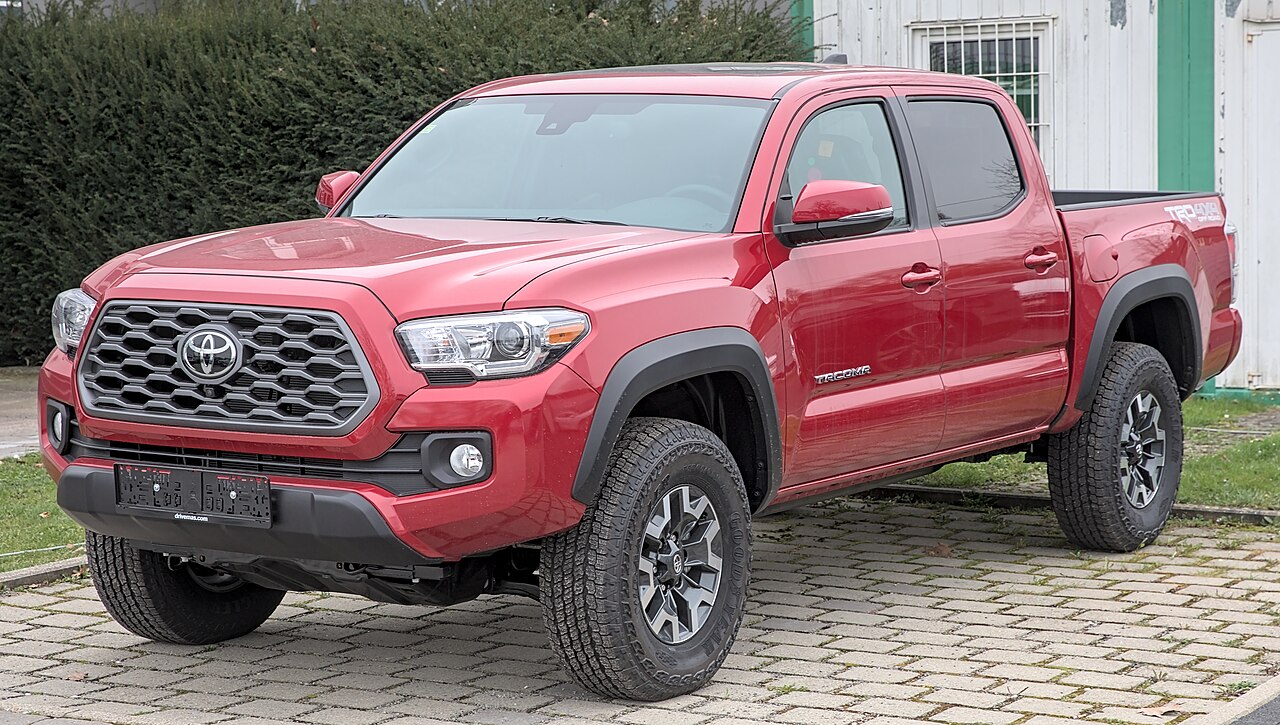
- 3.Fiber-Reinforced Sheet-Molded Composite (SMC): The rust-proof polymer matrix perfected by Toyota across four generations of Tacoma and the modern Tundra.
Understanding the strengths, vulnerabilities, and failure modes of these materials requires analyzing tensile yield strength, elasticity modulus, galvanic corrosion mechanisms, and impact kinetic energy absorption.
Explore our related guide on Midsize Pickup Trucks: Tacoma vs. Ranger vs. Colorado and Full-Size Truck Powertrains.
Materials Science & Mechanical Properties Matrix
| Material Property | High-Strength Roll-Formed Steel | Military-Grade Aluminum Alloy (6000-Series) | Sheet-Molded Composite (SMC Polymer) |
|---|---|---|---|
| Primary Base Elements | Iron (Fe) + Carbon (C) + Micro-Alloys | Aluminum (Al) + Magnesium (Mg) + Silicon (Si) | Thermoset Resin + Chopped Glass Fibers |
| Material Density | 7.85 g/cm³ (Heaviest) | 2.70 g/cm³ (~65% lighter) | 1.80 g/cm³ (~77% lighter) |
| Yield Strength (MPa) | 350 – 550 MPa | 240 – 310 MPa (Heat-Treated T6) | 120 – 180 MPa (Tensile Yield) |
| Ultimate Tensile Strength | 500 – 700 MPa | 290 – 380 MPa | 180 – 250 MPa |
| Modulus of Elasticity ($E$) | 205 GPa (Extremely Rigid) | 69 GPa (High Flex Compliance) | 10 – 14 GPa (Highly Elastic Flex) |
| Corrosion Mechanism | Iron Oxide ($Fe_2O_3$) Red Rust | Surface Aluminum Oxide ($Al_2O_3$) Film | 100% Inert (Zero Oxidation) |
| Galvanic Isolation Needed | None (Homogeneous with steel frame) | Critical (Requires Dielectric Barriers) | None (Electrical Insulator) |
| Impact Response (Drop Test) | High Dent Resistance; Plastic Deformation | Higher Tear/Puncture Risk on Sharp Edges | Elastic Rebound; Will Not Dent |
| Bedliner Requirement | Essential to prevent red rust | Strongly recommended to prevent tears | Completely Unnecessary |
| Coefficient of Thermal Exp. | 12 × 10?? / K | 23 × 10?? / K (High Expansion) | 15 × 10?? / K |
| Primary OEM Applications | Chevy Silverado, Colorado, Ram 1500 | Ford F-150, F-250/350 Super Duty | Toyota Tacoma (All Trims), Tundra |
Material 1: High-Strength Roll-Formed Steel
Steel has been the structural backbone of automotive manufacturing for over a century due to its unparalleled stiffness-to-cost ratio and predictable manufacturing behavior:
Steel Stress-Strain Elastic vs. Plastic Mechanics:
* Elastic Region (Low Impact): Material deflects temporarily under load and springs back to original contour without deformation.
* Yield Point (350 to 500+ MPa): Beyond this threshold, steel deforms plastically, leaving permanent dents or dings.
* Ultimate Tensile Strength (500 to 700 MPa): Maximum load before material tearing or rupture.
Metallurgy & Forming
Modern truck beds do not use soft, mild stamped steel. Instead, manufacturers like General Motors utilize roll-formed high-strength steel (HSS). Roll-forming involves passing cold steel coil stock through a sequential series of precision rollers that progressively bend the metal into bed floor corrugations without thinning out corner radii.
This process yields a minimum yield strength exceeding 500 MPa. When heavy cargo is dropped into a roll-formed steel bed, the high yield strength prevents the material from yielding plastically, offering superior resistance against permanent dishing and dimpling.
Corrosion Vulnerability: The Iron Oxide Cycle
The Achilles' heel of steel is atmospheric and chemical oxidation. Pure iron reacts spontaneously with oxygen and water:
Atmospheric Iron Oxidation Reaction:
4Fe + 3O2 + 6H2O ? 4Fe(OH)3 ? 2Fe2O3 · 3H2O (Hydrated Iron(III) Oxide / Red Rust)
Iron oxide molecules occupy roughly six times the volume of the underlying metallic iron, causing the surface to blister, flake off, and continuously expose fresh steel to corrosive attack. In snowbelt regions where road maintenance crews apply calcium chloride and rock salt, any unlined steel bed scratched down to bare metal will begin showing red rust within weeks.
Material 2: High-Strength Military-Grade Aluminum Alloy
In 2015, Ford initiated the most audacious materials revolution in modern truck history by transitioning the body and cargo bed of the F-150 to heat-treated 6000-series aluminum alloys:
The 6000-Series Alloy Chemistry
Automotive aluminum alloys used in truck beds are primarily 6022 and 6111 heat-treatable alloys, alloyed with magnesium ($0.6%-1.0%$) and silicon ($0.7%-1.3%$). When subjected to heat precipitation hardening, magnesium silicide ($Mg_2Si$) precipitates throughout the crystal lattice, dramatically increasing yield strength up to 300 MPa.
The decisive engineering advantage of aluminum is its density: at 2.70 g/cm³, it is roughly one-third the weight of steel. Ford shed up to 700 pounds (317 kg) of dead curb weight from the F-150, allowing engineers to reinvest mass into stronger boxed steel frame rails while increasing payload capacity.
Self-Healing Oxidation vs. Galvanic Danger
Unlike steel, aluminum never develops destructive rust. When clean aluminum encounters atmospheric oxygen, it instantaneously forms a 2- to 4-nanometer layer of aluminum oxide ($Al_2O_3$):
Passivating Aluminum Oxide Formation:
4Al + 3O2 ? 2Al2O3 (Creates a self-sealing transparent micro-barrier preventing further oxidation)
This oxide skin is ceramic-hard, chemically passive, and hermetically seals the metal surface against further corrosion. Even if an aluminum bed is deeply gouged by a metal toolbox, it will not rust.
However, aluminum introduces severe galvanic corrosion risks. When aluminum makes physical contact with steel (such as steel bed mounting bolts or frame brackets) in the presence of an electrolyte:
Key Formula:
Galvanic Potential: Aluminum (-1.66V) vs. Steel / Iron (-0.44V). Aluminum acts as a sacrificial anode if bare metals touch in an electrolyte.
Aluminum possesses a significantly more negative reduction potential than iron, meaning aluminum will sacrifice itself and rapidly dissolve if left in direct electrical contact with steel. Ford solved this through meticulous mechanical engineering:
- Solid zinc-nickel coated fasteners.
- Structural dielectric adhesive layers along structural seams.
- E-coat primer barriers that physically prevent steel-to-aluminum molecular contact.
Puncture Resistance Under Point Loads
Because aluminum possesses an elastic modulus of 69 GPa (compared to 205 GPa for steel), it deflects roughly three times as far under the same mechanical load before transferring stress. Under broad surface loads, aluminum absorbs energy through elastic deformation.
However, under extreme concentrated point loads, such as sharp metal toolboxes or pointed stone blocks dropped from shoulder height, aluminum's lower shear strength can cause the material to tear or puncture rather than purely denting. Consequently, a heavy-duty spray-in polyurethane bedliner is strongly advised on aluminum beds to distribute point impacts.
Material 3: Sheet-Molded Composite (SMC)
While domestic automakers debated steel vs. aluminum, Toyota pursued a completely different path: engineered fiber-reinforced polymers:
SMC Composite Structural Architecture:
* Structural Reinforcement: 25% to 35% by volume of 1-inch chopped structural E-glass fibers distributed in a random, multi-directional 3D orientation.
* Resin Matrix: High-performance vinylester or unsaturated polyester polymer resins that undergo irreversible cross-linking during thermal curing.
* Inorganic Fillers & UV Stabilizers: Calcium carbonate fillers and carbon black additives preventing ultraviolet degradation.
Chemical Composition & High-Pressure Molding
Sheet-Molded Composite (SMC) is not ordinary thermoplastic like a car bumper. It is a thermoset composite formulation consisting of:
- 1.Structural Reinforcement: 25% to 35% by volume of 1-inch (25 mm) chopped structural E-glass fibers distributed in a random, multi-directional 3D orientation.
- 2.Resin Matrix: High-performance vinylester or unsaturated polyester polymer resins that undergo irreversible cross-linking during thermal curing.
- 3.Inorganic Fillers & UV Stabilizers: Calcium carbonate fillers and carbon black additives that prevent ultraviolet degradation under decades of blistering desert sunlight.
The compound is compressed in matched hydraulic steel dies under pressures exceeding 1,000 PSI (6.9 MPa) at temperatures between 130°C and 160°C (265°F to 320°F). The resulting molded bed floor is dense, non-porous, and molded with integrated tie-down pockets, wheel wells, and structural ribbing in a single press cycle.
Mechanical Behavior: Total Elastic Recovery
Because SMC possesses an elastic modulus of 10 to 14 GPa, it is significantly more flexible than metals. When a heavy object is dropped into an SMC bed:
- Metals reach their yield point and deform plastically, leaving permanent dents.
- SMC undergoes elastic deformation, absorbing the kinetic energy through temporary flexing of the fiber matrix, and instantly snaps back to its original factory contour.
Furthermore, because composite contains zero metal ions, it is 100% immune to rust, galvanic corrosion, battery acid, and chemical solvents. Scratches on an SMC bed cannot rust because the composite is color-pigmented completely through its structural thickness.
Thermal & Environmental Limitations
While SMC is virtually impervious to environmental corrosion, it has specific material constraints:
- Extreme Cold Brittleness: Below -30°C (-22°F), thermoset polymer chains lose molecular mobility, slightly reducing the composite's impact fracture toughness.
- Point Load Puncture Limits: While resistant to blunt drops, high-velocity impacts from sharp tungsten or steel chisels can produce localized micro-cracking or fiber delamination.
- Modular Replacement: If an SMC bed floor suffers structural cracking from an extreme impact, it cannot be pounded out with a hammer or welded like steel; the damaged section or modular panel must be unbolted and replaced.
Drop-Impact Physics: Calculating Deformation Energy
When a 50-pound (22.7 kg) block of dense concrete falls from a height of 5 feet (1.52 meters) into an empty truck bed, the gravitational potential energy is converted entirely into kinetic impact energy:
Impact Kinetic Energy Equation (Bed Drop Test):
Ep = m · g · h = 22.7 kg × 9.81 m/s² × 1.52 m ? 338.5 Joules
(Equivalent to dropping a 50 lb landscaping cinder block from 5 feet into the bed)
Upon impact, this 338.5 Joules of energy must be absorbed:
- In Steel: High yield strength resists deep penetration; energy is absorbed through localized plastic strain (a shallow dent) and acoustic dissipation.
- In Aluminum: The lower modulus allows broader panel flexing, but sharp corners can punch localized tears through the sheet if the alloy exceeds its shear strain limit.
- In SMC Composite: The flexible glass-polymer matrix flexes elastically across a wide surface area, absorbing the 338 Joules and springing back with zero permanent deformation.
Summary & Buyer Recommendations
- Choose High-Strength Steel if you routinely haul jagged scrap iron, crushed rock, or demolition debris without a bedliner, and prioritize affordable body shop repairability over long-term winter salt immunity.
- Choose Military-Grade Aluminum if maximizing payload capacity and total fuel economy is your paramount priority, and you are willing to install a spray-in bedliner to guard against sharp point punctures.
- Choose Sheet-Molded Composite (SMC) if you live in severe road-salt climates, desire a maintenance-free bed that never needs an aftermarket liner, and prioritize dent-free elastic durability for overland camping and sports gear.
Explore our technical comparisons on Midsize Pickup Trucks: Tacoma vs. Ranger vs. Colorado and All-Weather AWD Shootout.
Frequently asked questions
Does a composite truck bed crack in freezing winter temperatures?
No. Automotive-grade Sheet-Molded Composite (SMC) formulations utilize vinylester or polyester thermoset resins heavily reinforced with randomly oriented 1-inch chopped glass fibers (25% to 35% fiber volume). Standard automotive cold-temperature testing down to -40°C (-40°F) proves SMC maintains sufficient tensile impact strength without brittle fracturing during cargo loading.
Why do Ford aluminum truck beds not rust like older steel beds?
Aluminum contains virtually zero iron. When exposed to oxygen, aluminum instantly forms a microscopically thin, self-healing layer of aluminum oxide (Al2O3) that shields the underlying metal from further atmospheric degradation. Unlike iron oxide (rust), which expands, flakes off, and eats through steel, aluminum oxide is passive and chemically stable.
What causes galvanic corrosion between aluminum body panels and steel truck frames?
Galvanic corrosion occurs when two electrochemically dissimilar metals (such as aluminum with an electrode potential of -1.66V and steel at -0.44V) make direct electrical contact in the presence of an electrolyte like salt water. To prevent the aluminum from acting as a sacrificial anode, automakers insert dielectric isolation barriers, structural adhesives, and coated stainless-steel fasteners.
Do you need a spray-in bedliner on a composite truck bed?
No. A composite truck bed (like that on the Toyota Tacoma) requires no spray-in or drop-in bedliner. The composite material itself is color-impregnated throughout its entire cross-section, meaning scratches cannot expose bare metal or initiate oxidation. Steel and aluminum beds, by contrast, strongly benefit from polyurethane spray-in liners to prevent puncture tears and abrasion.
Which truck bed material is easiest and cheapest to repair after heavy damage?
High-strength steel is the easiest and least expensive to repair in conventional body shops using standard MIG welding, dent pullers, and panel beating. Aluminum requires dedicated clean-room welding tools to prevent cross-contamination, while severely cracked SMC composite beds are typically unbolted and replaced as modular panels rather than patched.
Cite this page: https://cardataindex.com/blog/truck-bed-materials-steel-vs-aluminum-vs-composite-smc
Keep researching
Cross-check the numbers in this guide against live factory data in our specification index or decode a specific car with the free VIN decoder.