Toyota Prius IV (XW50)
The first Prius engineered on the rigid TNGA-C modular platform, delivering an industry-benchmark 40% thermal efficiency from its 1.8L Atkinson-cycle engine, independent double-wishbone rear suspension, and available electronic AWD-e.
Generation Quick Facts: The Toyota Prius IV (XW50) was manufactured from 2016 – 2022 (2016, 2017, 2018, 2019, 2020, 2021, 2022 model years) as a liftback. Across 3 verified powertrains, power outputs range from 121 to 121 hp, with top fuel economy reaching 56.0 MPG combined (L Eco FWD).
Power range
121 hp
Quickest 0–100
10.2 s
Best combined
56 MPG
Length
4.58 m
01Decision support
Which Prius IV (XW50) suits you?
Daily driver · least fuel
L Eco FWD
56.0 MPG combined
It burns up to 13% less fuel per mile than the thirstiest Prius IV (XW50).
Performance · quickest
XLE AWD-e
0–100 km/h in 10.2s · 121 hp
The straight-line choice of this generation.
Sweet spot · balance
XLE AWD-e
121 hp · 49.0 MPG
Sits mid-range for power without paying the fuel or price tax of the flagship trim. Usually the best value on the used market.
023 powertrains (2 hybrid gasoline · 1 plug-in hybrid gasoline)
Full specifications
| Specification | L Eco FWDHybrid Gasoline | XLE AWD-eHybrid Gasoline | Prius Prime PHEVPlug-in Hybrid Gasoline |
|---|---|---|---|
| Engine | |||
| Engine code | 2ZR-FXE (THS II) | 2ZR-FXE AWD-e | 2ZR-FXE Prime Plug-in |
| Fuel type | Hybrid Gasoline | Hybrid Gasoline | Plug-in Hybrid Gasoline |
| Displacement | 1.8L (1,798 cc) | 1.8L (1,798 cc) | 1.8L (1,798 cc) |
| Aspiration | Naturally aspirated Atkinson Cycle | Naturally aspirated Atkinson Cycle | Naturally aspirated Atkinson Cycle |
| Cylinders | Inline-4 | Inline-4 | Inline-4 |
| Power & Performance | |||
| Power | 121 hp / 90 kW | 121 hp / 90 kW | 121 hp / 90 kW |
| Torque | 142 Nm / 105 lb-ft | 142 Nm / 105 lb-ft | 142 Nm / 105 lb-ft |
| 0–100 km/h | 10.4 s | 10.2 s | 10.8 s |
| Top speed | 180 km/h (112 mph) | 180 km/h (112 mph) | 180 km/h (112 mph) |
| Transmission & Drivetrain | |||
| Transmission | Electronically Controlled Continuously Variable Transmission | e-CVT with Independent Rear Electric Induction Motor | Dual-Motor Drive e-CVT Transaxle |
| Gears | — | — | — |
| Drivetrain | Front-Whee | Electronic | Front-Whee |
| Fuel Economy & Emissions | |||
| City | 58 MPG (4.1 L/100km) | 51 MPG (4.6 L/100km) | 55 MPG (4.3 L/100km) |
| Highway | 53 MPG (4.4 L/100km) | 47 MPG (5.0 L/100km) | 53 MPG (4.4 L/100km) |
| Combined | 56 MPG (4.2 L/100km) | 49 MPG (4.8 L/100km) | 54 MPG (4.4 L/100km) |
| Electric range | — | — | 40 km (25 mi) |
| Battery | 0.8 kWh | 1.2 kWh | 8.8 kWh |
| CO₂ emissions | — | — | — |
| Weight & Body | |||
| Curb weight | 1,365 kg (3,009 lbs) | 1,460 kg (3,219 lbs) | 1,525 kg (3,362 lbs) |
| Seats | 5 | 5 | 5 |
| Doors | 5 | 5 | 5 |
| Model years | 2016-2022 | 2019-2022 | 2017-2022 |
0Exterior
Dimensions
Length
4,575 mm
180.1 in
Width
1,760 mm
69.3 in
Height
1,470 mm
57.9 in
Wheelbase
2,700 mm
106.3 in
Curb weight spans 1,365–1,525 kg depending on powertrain. Battery and AWD hardware add the most mass.
05Long-tail answers
Prius IV (XW50): questions answered
What engines and trims are available on the Toyota Prius IV (XW50)?
The Toyota Prius IV (XW50) lineup offers 2 hybrid gasoline · 1 plug-in hybrid gasoline: L Eco FWD (121 hp), XLE AWD-e (121 hp), Prius Prime PHEV (121 hp).
How quick is the Toyota Prius IV (XW50) from 0 to 100 km/h?
The fastest trim, the XLE AWD-e, accelerates from 0 to 100 km/h in 10.2s, reaching a top speed of 180 km/h (112 mph) with the L Eco FWD.
What is the most fuel-efficient Toyota Prius IV (XW50) trim?
The L Eco FWD delivers the highest fuel economy at 56.0 MPG (EPA combined). Across the 3 powertrains, fuel economy spans 49–56 combined MPG.
What model years are included in the Toyota Prius IV (XW50)?
The Toyota Prius IV (XW50) was produced from 2016 – 2022, spanning the following model years: 2016, 2017, 2018, 2019, 2020, 2021, 2022.
What are the exterior dimensions of the Toyota Prius IV (XW50)?
4575 mm long, 1760 mm wide, 1470 mm tall on a 2700 mm wheelbase (180.1 in overall length).
Sources for this page
- EPA fuel-economy records: Toyota PriusCertification data, 2016–2022
- NHTSA vehicle file: recalls, complaints and investigations2016 Toyota Prius, official safety record
- NHTSA vPIC vehicle databasePowers our VIN decoder, the federal manufacturer registry
- Toyota official: data sheets and archiveManufacturer-published specifications
Figures on this page are compiled from the sources above and cross-checked against manufacturer data sheets. US-market EPA cycle where noted; European WLTP values are measured differently and are not directly comparable.
Check XW50 VIN
NHTSA vPICVerify factory engine codes, transmission, and active recall status for this vehicle before purchase.
Toyota Prius IV (XW50)Owner Advisories, Reliability & Technical Guides
Toyota RAV4 Hybrid "Cablegate" Corrosion: Rear Motor Cable Failure, P0AA6 Codes & Warranty W65 Guide
Definitive Toyota RAV4 & Highlander Hybrid Cablegate guide: 650V rear motor cable corrosion, DTC P0AA6 isolation fault, $6,500 replacement cost, and Warranty W65 coverage.
November 11, 2026
Toyota Prius & Hybrid 1.8L Head Gasket Failure: P0301 Cold Engine Knock, Clogged EGR Cooler & Cleaning Protocol
In-depth Toyota Prius (Gen 3/4) & Camry Hybrid 1.8L 2ZR-FXE head gasket guide: P0301/P0300 misfire, cold start death rattle knock, EGR decarb protocol & updated MLS gasket.
November 8, 2026
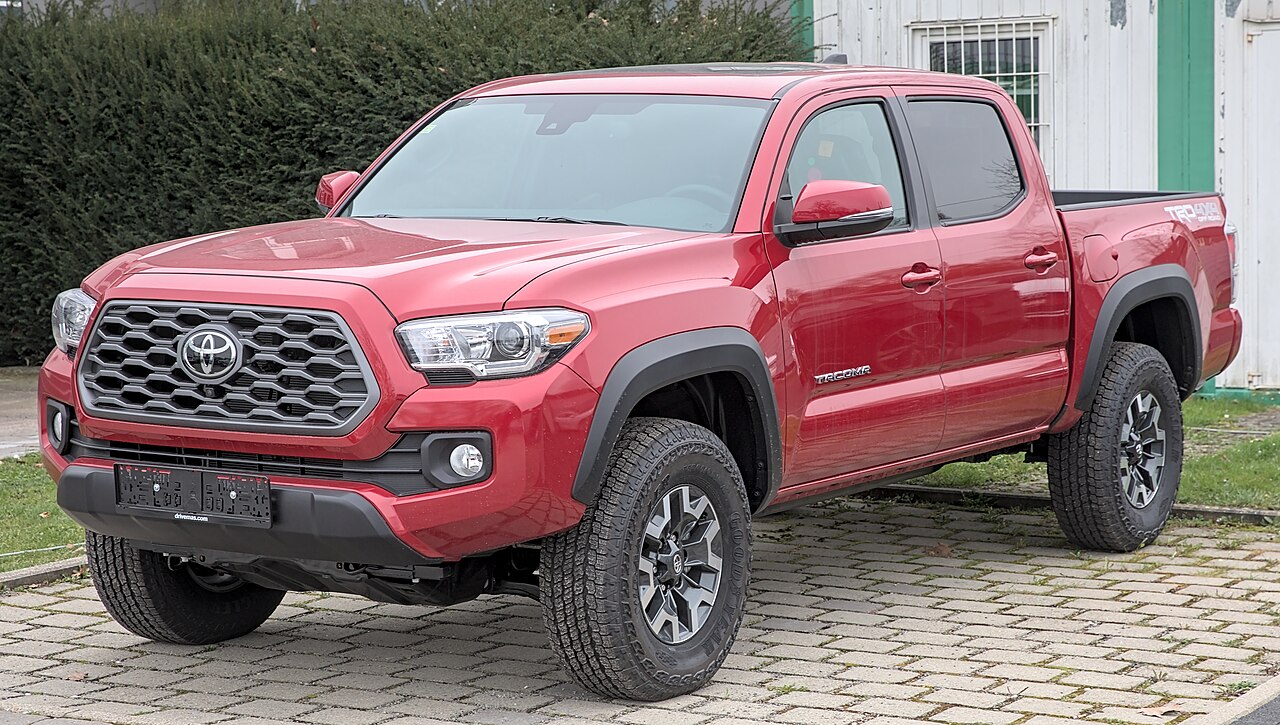
Midsize Pickup Trucks: Toyota Tacoma vs. Ford Ranger vs. Chevy Colorado (Towing, Payload & Turbo-4 vs. Hybrid Reliability)
Engineering comparison of 2026 midsize trucks: Toyota Tacoma vs. Ford Ranger vs. Chevy Colorado. Compare towing, payload, turbo powertrains, frames, and durability.
October 30, 2026