Entry Luxury Sedans Compared: BMW 3 Series vs. Mercedes C-Class vs. Audi A4
Tri-corner German executive sedan shootout: BMW 3 Series vs Mercedes-Benz C-Class vs Audi A4. Compare rear-drive balance, interior luxury, and turbo efficiency.
Car Data Index Editorial Desk
Automotive data desk · Sources: NHTSA · EPA · OEM records
Executive Summary: The German Compact Executive Sedan Benchmark
For over four decades, the compact executive sports sedan segment has represented the engineering nucleus of the German automotive industry. Balancing highway stability at 155 mph on the unrestricted German Autobahn with daily suburban commuting comfort, three vehicles establish the global benchmark: the BMW 3 Series (G20), the Mercedes-Benz C-Class (W206), and the Audi A4 (B9.5).
While all three luxury marques have migrated toward 48-volt mild-hybrid electrification and massive high-definition digital glass cockpits, their underlying chassis philosophies, suspension kinemetics, and powertrain layouts remain distinct:
- The **BMW 3 Series** remains the driver-centric benchmark, anchored by longitudinal rear-wheel-drive proportions, near-perfect 50:50 axle weight distribution, rigid CLAR platform metallurgy, and the industry-standard ZF 8HP torque-converter automatic.
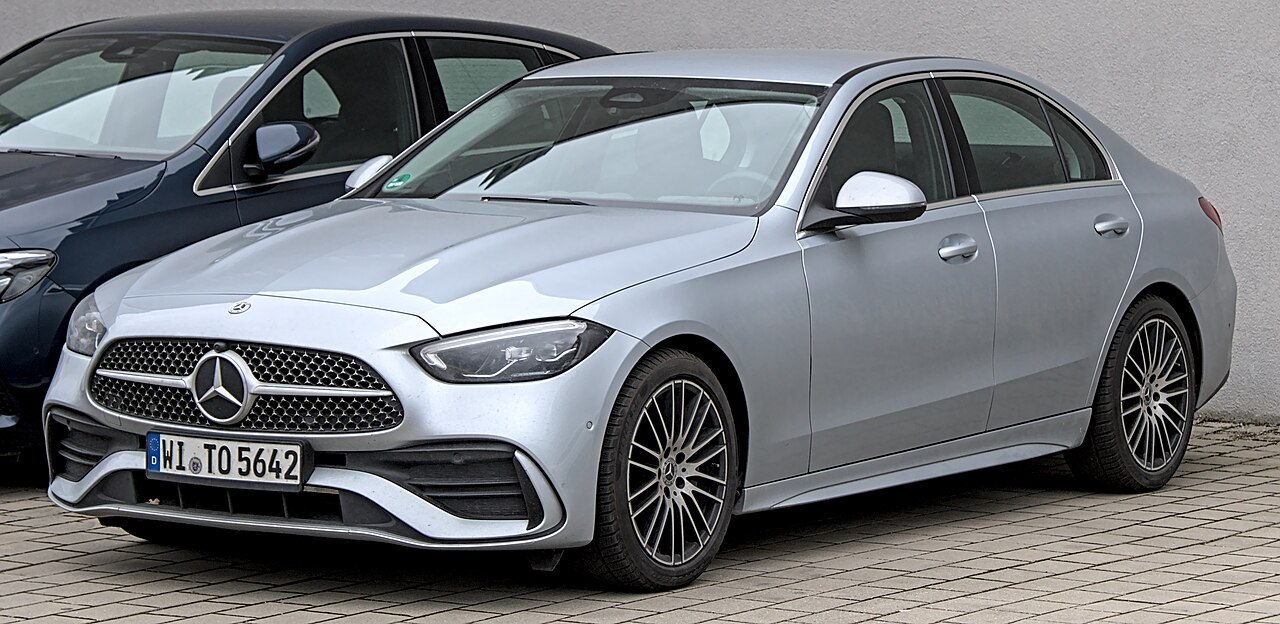
- The **Mercedes-Benz C-Class** prioritizes baby-S-Class opulence, showcasing an opulent 11.9-inch portrait MBUX center stack, standard 48-volt Integrated Starter-Generator (ISG) mild-hybrid powertrain assist, and supple multi-link suspension tuned for low-frequency vibration isolation.
- The **Audi A4** delivers mechanical equilibrium through its longitudinal MLB Evo platform layout, standard quattro all-wheel drive with ultra predictive torque vectoring, and lightning-fast dual-clutch transmission shifts.
This technical engineering comparative audit evaluates chassis torsional rigidity, suspension geometry, engine metallurgy, real-world highway fuel economy, and 100,000-mile maintenance failure modes across all three German contenders.
Side-by-Side Powertrain & Engineering Matrix
The engineering matrix below compares verified factory specifications across standard US-specification 2.0-liter turbocharged variants of the BMW 330i, Mercedes-Benz C 300, and Audi A4 45 TFSI:
| Engineering Parameter | BMW 330i (G20) | Mercedes-Benz C 300 (W206) | Audi A4 45 TFSI (B9.5) |
|---|---|---|---|
| Platform Architecture | BMW CLAR (Cluster Architecture) | Mercedes MRA2 (Modular Rear Arch.) | Audi / VW Group MLB Evo |
| Powertrain Layout | Longitudinal Front Mid-Engine, RWD/AWD | Longitudinal Front-Mounted, RWD/AWD | Longitudinal Front-Mounted, Standard AWD |
| Engine Code | BMW B48B20 2.0L Turbo I4 | Mercedes M254 2.0L Turbo I4 | Audi EA888 Gen 4 2.0L TFSI I4 |
| Displacement (cc / cu in) | 1,998 cc (121.9 cu in) | 1,999 cc (122.0 cu in) | 1,984 cc (121.1 cu in) |
| Bore x Stroke (mm) | 82.0 mm x 94.6 mm (Undersquare) | 83.0 mm x 92.4 mm (Undersquare) | 82.5 mm x 92.8 mm (Undersquare) |
| Compression Ratio | 10.2:1 | 10.5:1 | 10.5:1 |
| Horsepower @ RPM | 255 hp @ 5,000–6,500 RPM | 255 hp @ 5,800 RPM | 261 hp @ 5,000–6,500 RPM |
| Torque @ RPM | 295 lb-ft @ 1,550–4,400 RPM | 295 lb-ft @ 2,000–3,200 RPM | 273 lb-ft @ 1,600–4,000 RPM |
| Mild-Hybrid System | 48-Volt Starter-Generator (Post-LCI) | 48-Volt Integrated Starter-Gen (ISG) | 48-Volt Belt Alternator Starter (BAS) |
| Mild-Hybrid Boost Output | +11 hp / +148 lb-ft | +20 hp / +148 lb-ft | Minor coasting restart assist |
| Transmission Type | ZF 8-Speed Torque Converter (8HP51) | Mercedes 9G-Tronic 9-Speed Automatic | 7-Speed S-Tronic Dual-Clutch (DL382) |
| Front Suspension | Double-Joint Spring-Strut Axle | Four-Link with Independent Lower Links | Five-Link with Lightweight Aluminum Arms |
| Rear Suspension | Five-Link Axle with Subframe Mounts | Five-Link Axle with Anti-Squat Geometry | Five-Link Independent Rear Suspension |
| Curb Weight (AWD Base) | 3,768 lbs (1,709 kg) | 3,825 lbs (1,735 kg) | 3,627 lbs (1,645 kg) |
| Weight Distribution (F:R) | 50.1% : 49.9% (Perfect Balance) | 51.5% : 48.5% | 55.8% : 44.2% (Front-Heavy) |
| EPA Fuel Economy (AWD Comb) | 27 MPG (24 City / 33 Hwy) | 26 MPG (23 City / 33 Hwy) | 27 MPG (24 City / 32 Hwy) |
Structural Platforms: CLAR vs. MRA2 vs. MLB Evo
The underlying chassis rigidity dictates how a vehicle resists twisting forces under cornering loads while isolating high-frequency road vibrations:
1. BMW CLAR (Cluster Architecture)
The G20 3 Series rides on BMW's CLAR platform, constructed from an optimized combination of hot-stamped boron ultra-high-strength steel, tailored blanks, and structural cast aluminum. BMW engineers mounted the front spring struts and engine crossmember directly to aluminum casting nodes in the front bulkhead.
- Overall static torsional rigidity increases by 25% over the previous F30 generation, rising to an immense 50% increase in specific subframe mounting zones.
- The steering rack is rigidly bolted without rubber compliance bushings to the front axle carrier, resulting in instantaneous directional changes and zero steering column deadband.
2. Mercedes-Benz MRA2 (Modular Rear Architecture)
Sharing structural elements with the flagship S-Class (W223), the W206 C-Class features extensive multi-phase high-tensile steels and structural foaming in the A-, B-, and C-pillars.
- Mercedes emphasizes low-frequency acoustic damping: the front subframe is isolated by hydraulic rubber bearings that absorb highway road joints and asphalt coarse textures.
- The battery for the 48V mild-hybrid system is mounted deep within the trunk sub-floor, stabilizing the vehicle's roll center at triple-digit cruising speeds.
3. Audi MLB Evo (Modularer Längsbaukasten)
The Audi A4 utilizes the MLB Evo platform, which mounts the engine longitudinally directly forward of the front axle centerline.
- While placing the powertrain forward creates a nose-heavy 55.8:44.2 weight bias, Audi offsets this by deploying a sophisticated five-link front suspension where upper and lower control arms manage steering and damper articulation independently.
- The front suspension turrets are formed from single-piece cast aluminum, saving 17.6 lbs (8 kg) of mass at the highest point of the engine bay.
Powertrain Engineering: B48 vs. M254 vs. EA888 Gen 4
All three manufacturers employ 2.0-liter turbocharged four-cylinder aluminum blocks, but internal componentry and thermal management reveal distinct priorities:
1. BMW B48B20: Closed-Deck Durability
The BMW B48 is a modular engine sharing architectural lineage with the legendary 3.0-liter B58 inline-six.
- Closed-Deck Crankcase: Unlike traditional open-deck designs where the cylinder barrels stand unsupported at the top, the B48 features a closed deck with minimal coolant passages, allowing cylinder pressures exceeding 20 bar without bore ovalization.
- Twin-Scroll Turbocharging: Exhaust pulses from cylinders 1 and 4 are completely segregated from cylinders 2 and 3 into twin turbine scrolls, spooling peak torque (295 lb-ft) from an exceptionally low 1,550 RPM.
- Double-VANOS and Valvetronic: BMW dispenses with traditional throttle body restriction during normal operation, modulating valve lift directly down to 0.2 mm to eliminate pumping losses.
2. Mercedes-Benz M254: NANOSLIDE and Integrated Starter-Generator
Introduced in the W206, the M254 features Formula 1-derived metallurgical treatments:
- NANOSLIDE Cylinder Coating: Instead of pressed-in heavy iron liners, Mercedes uses twin-wire electric arc spraying (LDS) to deposit an ultra-thin, highly wear-resistant iron coating onto the aluminum cylinder bores. This mirrors a glass-like finish, reducing internal friction by 50%.
- CONICSHAPE Bore Honing: The lower cylinder bore is honed wider at the bottom (trumpet shape), compensating for thermal piston skirt expansion under high heat.
- Integrated Starter-Generator (ISG): Mounted directly inside the transmission bellhousing between the engine and torque converter, the 48V electric motor delivers 20 hp and 148 lb-ft of instantaneous silent torque, masking turbo spool lag entirely.
3. Audi EA888 Gen 4: Modified Miller Cycle (B-Cycle)
Volkswagen Group's fourth-generation EA888 engine focuses on peak thermodynamic efficiency:
- B-Cycle Combustion: Under part-load highway cruising, the intake valves close prematurely before bottom dead center (early intake valve closing), shortening the effective compression stroke while maintaining a long expansion stroke. This mimics the thermodynamic advantages of the Atkinson cycle.
- High-Pressure Injection: The fuel delivery rail operates at 350 bar (5,076 PSI), breaking gasoline into microscopic droplets for clean combustion that meets strict Euro 6e and EPA Tier 3 emissions standards.
Transmissions: ZF 8HP Torque Converter vs. 9G-Tronic vs. 7-Speed S-Tronic
Power transmission represents another philosophical battleground among the German tri-corner rivals:
1. BMW: ZF 8-Speed Steptronic (8HP51)
Considered by automotive engineers as the finest automatic gearbox in production, the ZF 8HP utilizes four planetary gear sets and five shift elements.
- Torque converter lockup occurs almost immediately above 5 mph, delivering the direct connected feel of a manual gearbox without low-speed shuddering.
- Shift response in Sport+ mode takes approximately 150 milliseconds, executing multi-gear downshifts (e.g., 8th directly to 3rd) in a single physical rotation of the internal gear packs.
2. Mercedes: 9G-Tronic (725.0)
Designed and manufactured in-house by Mercedes-Benz, the 9G-Tronic features an ultra-wide gear ratio spread of 9.15:1.
- At 75 mph (120 km/h) in 9th gear, the engine hums at just 1,350 RPM, delivering serene long-distance acoustic refinement and outstanding highway fuel economy.
- Two auxiliary mechanical pumps maintain hydraulic pressure even when the internal combustion engine shuts off during coasting maneuvers.
3. Audi: 7-Speed S-Tronic Dual-Clutch (DL382)
Audi opts for an automated dual-clutch transmission with wet multi-plate clutch packs:
- Shift times are lightning-fast at under 100 milliseconds, with pre-selected gear sets allowing seamless acceleration bursts.
- While dual-clutch transmissions can exhibit slight hesitation in creeping stop-and-go city traffic, Audi's electrohydraulic control software has largely eliminated low-speed clunkiness.
Suspension Dynamics & Highway Tracking
On challenging backroads and interstate highways, the mechanical suspension layouts define handling character:
- BMW 330i (Lift-Related Dampers): The standard G20 suspension utilizes mechanical hydraulic bump stops that add progressive damping resistance as suspension travel compresses. The chassis remains exceptionally flat in tight bends without demanding brittle, kidney-punishing spring rates.
- Mercedes C 300 (Agility Control): The multi-link front suspension isolates lateral pavement impacts. Steering feedback is lighter and more relaxed than the BMW, designed for high-speed straight-line Autobahn stability where nervous steering corrections would induce driver fatigue.
- Audi A4 (quattro with ultra technology): Rather than a permanent mechanical Torsen differential, current A4 models use an electrohydraulic multi-plate clutch that disconnects the rear driveshaft when cruising, eliminating 5% of mechanical parasitic drag. When sensors detect slip or aggressive throttle input, all four wheels engage within 200 milliseconds.
100,000-Mile Reliability & Maintenance Protocols
Maintaining a German executive sedan beyond factory warranty requires disciplined mechanical awareness:
| Failure Mode / Maintenance Item | BMW 3 Series (B48) | Mercedes-Benz C-Class (M254) | Audi A4 (EA888 Gen 4) |
|---|---|---|---|
| Coolant System Plumbing | Plastic coolant return lines and oil filter housing embrittle after 70k miles. | Water pump solenoids require periodic scanning for electrical shorts. | Water pump and thermostat housing assembly prone to weeping coolant by 60k miles. |
| Valve Cover & Oil Leaks | Valve cover gasket and integrated PCV diaphragm weep oil around 80k miles. | Valve cover is robust; watch for minor cam sensor harness oil wicking. | Upper timing chain cover gasket weeps oil over alternator; replace seals at 75k miles. |
| Carbon Buildup on Valves | Direct-injection only; walnut-blasting recommended at 70,000–80,000 miles. | Direct-injection with high pressure; Italian tune-ups help mitigate deposits. | Gen 4 features dual injection in select markets, reducing intake valve deposits significantly. |
| Transmission Service Interval | ZF recommends fluid and pan/filter replacement every 50,000–60,000 miles. | Mercedes recommends 9G-Tronic fluid flush at 60,000 miles or 6 years. | S-Tronic dual-clutch fluid (MTF/ATF) must be replaced strictly every 40,000 miles. |
| 48V Electrical Architecture | Robust lithium-ion 48V pack; minimal reported starter-generator failures. | Early 2022/2023 W206 models experienced 48V battery ground strap sensor faults. | Mild-hybrid starter belt requires inspection every 40k miles for micro-cracking. |
CDI Verdict: Choosing Your German Executive Sedan
- **Choose the BMW 3 Series** if you value balanced chassis dynamics, intuitive physical iDrive ergonomics, communicative steering feedback, and the bulletproof reliability of the B48/ZF 8HP powertrain combination.
- **Choose the Mercedes-Benz C-Class** if your priorities center on executive cabin prestige, unmatched night-time ambient lighting aesthetics, whisper-quiet highway ride comfort, and smooth 48V mild-hybrid low-speed torque fill.
- **Choose the Audi A4** if you want understated design maturity, standard all-weather quattro all-wheel drive, lightning-fast DCT shift response, and tactile physical interior climate switches.
Frequently asked questions
Which German compact sedan is the most reliable: BMW 330i, Mercedes C 300, or Audi A4?
The BMW 330i equipped with the modular B48 engine and ZF 8HP transmission has demonstrated the highest long-term mechanical reliability in this class. The closed-deck block and robust planetary automatic avoid the dual-clutch fluid sensitivities of Audi's S-Tronic and the early 48V electrical ground sensor issues reported on W206 Mercedes C-Class models.
Why does the BMW 3 Series handle better than the Mercedes C-Class and Audi A4?
The BMW 3 Series achieves near-perfect 50:50 front-to-rear weight distribution and mounts its engine longitudinally far behind the front axle line. In contrast, the Audi A4 carries 56% of its weight over the front wheels due to its forward engine placement, while the Mercedes C-Class is tuned with softer hydraulic subframe bushings prioritizing highway comfort over sharp steering feedback.
What is the difference between Audi quattro and BMW xDrive?
Modern Audi A4 models utilize 'quattro with ultra technology,' an electrohydraulic multi-plate clutch system that operates predominantly in front-wheel drive during highway cruising and engages the rear axle within 200 ms when slip is detected. BMW xDrive is a rear-biased all-wheel-drive system that permanently sends 60% of engine torque to the rear wheels under normal driving, preserving classic sports sedan handling dynamics.
How often should you service the transmission on an Audi, BMW, or Mercedes sedan?
Audi S-Tronic dual-clutch gearboxes require strict fluid changes every 40,000 miles. BMW recommends servicing the ZF 8HP transmission between 50,000 and 60,000 miles with a new fluid and integrated pan/filter assembly. Mercedes-Benz recommends flushing the 9G-Tronic transmission at 60,000 miles or 6 years.
Do 48-volt mild-hybrid systems save significant fuel on German sedans?
Yes. Integrated 48-volt mild-hybrid systems (such as the Mercedes ISG) allow seamless engine shut-off during highway coasting and smooth start-stop engine restarts in stop-and-go city traffic, typically delivering a 7% to 10% real-world fuel economy improvement while providing instant electric torque fill before the turbocharger reaches full boost.
Cite this page: https://cardataindex.com/blog/entry-luxury-sedans-compared-bmw-3-series-vs-c-class-vs-audi-a4
Keep researching
Cross-check the numbers in this guide against live factory data in our specification index or decode a specific car with the free VIN decoder.