Electric Crossovers Compared: Tesla Model Y vs. Kia EV6 vs. Hyundai Ioniq 5 (Range, 800V Charging & Cargo)
Direct EV showdown: Tesla Model Y vs Kia EV6 vs Hyundai Ioniq 5. Compare 800V vs 400V charging speeds, real-world EPA range, interior cargo room, and AWD performance.
Car Data Index Editorial Desk
Automotive data desk · Sources: NHTSA · EPA · OEM records
Executive Summary: The Benchmark Electric Crossover Battle
The mid-size electric crossover segment has emerged as the principal battleground for automotive electrification globally. For prospective EV adopters seeking family versatility, long highway cruising range, and all-weather capability, three models consistently define the segment: the Tesla Model Y, the Kia EV6 (CV), and the Hyundai Ioniq 5 (NE).
While Tesla established the mass-market standard through vertical software integration and its proprietary Supercharger network, Hyundai Motor Group launched a direct technological assault utilizing its dedicated 800-volt E-GMP (Electric Global Modular Platform) architecture.
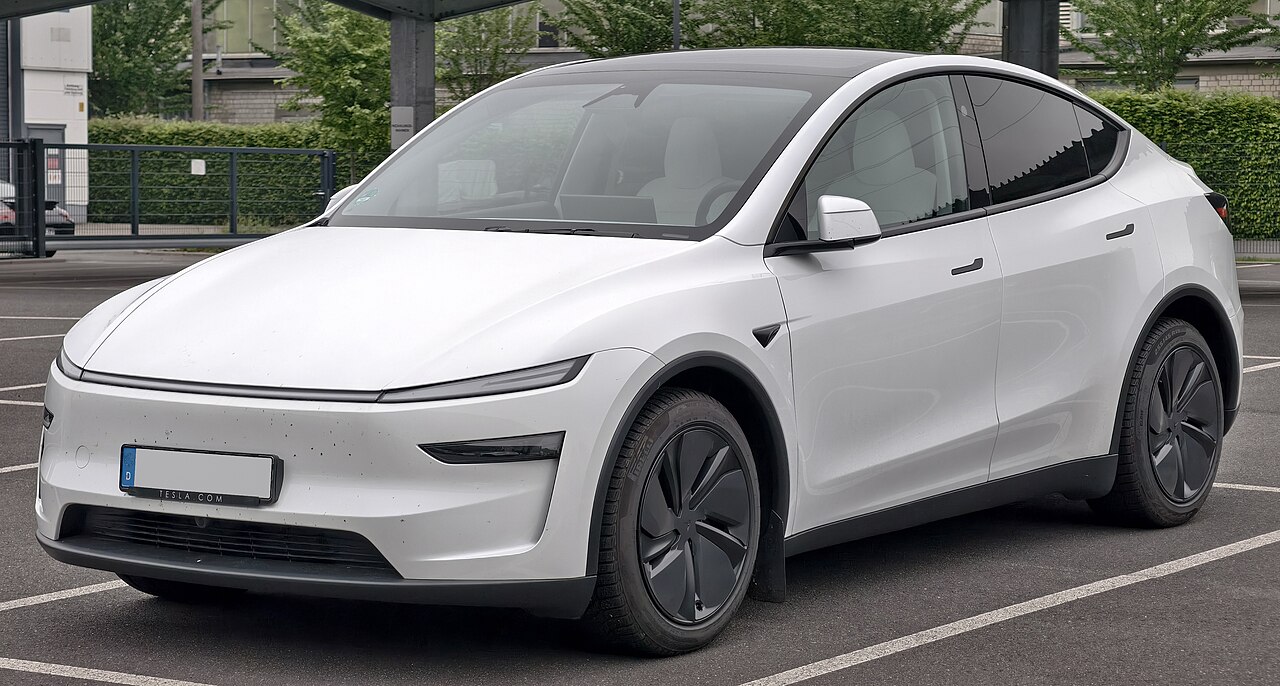
- The Tesla Model Y emphasizes structural simplicity through massive single-piece megacastings, industry-leading volumetric cargo capacity, and benchmark software efficiency.
- The Kia EV6 prioritizes aggressive grand-tourer styling, sports-sedan chassis dynamics, and ultra-high-speed 800V DC fast charging capable of adding 200 miles of range in just 18 minutes.
- The Hyundai Ioniq 5 embraces retro-futuristic geometric packaging, an ultra-long 3,000 mm wheelbase, a lounge-like modular cabin floor, and compliant ride comfort for family commuting.
This technical engineering audit directly evaluates chassis architecture, battery chemistry and voltage systems, real-world cold-weather thermal management, DC charging curves, and interior packaging across all three EV benchmarks.
Side-by-Side EV Engineering Matrix: Charging, Range & Powertrains
The comparative engineering matrix below analyzes verified factory specifications across current production variants of the Tesla Model Y, Kia EV6, and Hyundai Ioniq 5:
| Vehicle Model | Platform Architecture | High-Voltage Architecture | Battery Capacity (Net / Gross) | EPA Range (AWD / RWD) | Peak DC Charge Rate | 10%–80% Fast Charge Time | System Power & Torque (AWD) | Cargo Space (Behind Row 2 / Max) |
|---|---|---|---|---|---|---|---|---|
| Tesla Model Y Long Range | Tesla Semi-Monocoque Megacastings | 400-Volt Architecture | 75.0 kWh / 81.0 kWh | 308 Miles / 320 Miles | 250 kW (Supercharger V3) | 27–30 Minutes | 384 hp / 376 lb-ft | 30.2 cu ft / 72.1 cu ft (+ 4.1 cu ft frunk) |
| Kia EV6 Long Range (CV) | Hyundai-Kia E-GMP Dedicated | 800-Volt Multi-Charging | 77.4 kWh / 84.0 kWh | 282 Miles / 310 Miles | 235 kW (800V DC Ultra-Fast) | 18 Minutes | 320 hp / 446 lb-ft | 24.4 cu ft / 50.2 cu ft (+ 0.7 cu ft frunk) |
| Hyundai Ioniq 5 Long Range (NE) | Hyundai-Kia E-GMP Dedicated | 800-Volt Multi-Charging | 77.4 kWh / 84.0 kWh | 260 Miles / 303 Miles | 235 kW (800V DC Ultra-Fast) | 18 Minutes | 320 hp / 446 lb-ft | 27.2 cu ft / 59.3 cu ft (+ 0.8 cu ft frunk) |
Structural Platforms: Tesla Megacastings vs. Hyundai-Kia E-GMP
The physical construction of these vehicles reveals fundamentally distinct approaches to automotive structural engineering:
1. Tesla Model Y: High-Pressure Aluminum Megacastings
Tesla pioneered the elimination of dozens of stamped steel body panels by introducing massive front and rear high-pressure gigacast aluminum assemblies. Coupled with a structural battery pack where the cylindrical battery cells (2170 or 4680 formats) act as a load-bearing member of the floor structure, the Model Y eliminates traditional transverse floor crossmembers. This yields immense torsional rigidity while minimizing factory assembly complexity and curb weight (the AWD Long Range weighs approximately 4,398 lbs).
2. Hyundai Motor Group E-GMP: Flat Skateboard with Integrated Drive Axles
Developed specifically for dedicated battery-electric vehicles across Hyundai and Kia, E-GMP employs an ultra-rigid steel battery tray encircled by ultra-high-strength hot-stamped steel side sill reinforcements designed to deflect side-impact intrusion forces. Crucially, E-GMP integrates the wheel bearing and driveshaft into a single forged component known as an Integrated Drive Axle (IDA)—technology adapted directly from Hyundai's World Rally Championship (WRC) race cars. The IDA enhances shaft stiffness by 42% while shedding approximately 10% of rotating un-sprung mass.
High-Voltage Electrical Architecture: 400-Volt vs. 800-Volt DC Fast Charging
The most profound technological differentiator between Tesla and the Korean twins lies in their operating electrical bus voltages:
- Tesla's 400V System: Operates at a nominal ~350–400 volts. To deliver its peak charging rate of 250 kW at a Supercharger V3 dispenser, the system must draw approximately 625 to 650 amps of electrical current. High current generates significant I²R thermal resistance heat in the charging cable, inlet pins, and internal battery busbars. Consequently, while the Model Y spikes briefly to 250 kW when plugged in at a low state-of-charge (under 15%), thermal throttling forces the charge curve to taper rapidly, dropping to ~110 kW at 50% and ~50 kW by 80%. A standard 10% to 80% replenishment requires 27 to 32 minutes.
- E-GMP's 800V Architecture: Operates at a nominal ~697–800 volts. By doubling system voltage, the Kia EV6 and Ioniq 5 achieve their 235 kW peak charging rate with only ~300 to 350 amps of current. Because heat dissipation scales quadratically with current, the thermal load on battery cells is radically reduced. As a result, the E-GMP charging curve maintains an incredible flat plateau, sustaining over 190 kW all the way past 65% state-of-charge. A 10% to 80% DC charge is executed in a verified 18 minutes flat on 350 kW CCS dispensers.
Furthermore, E-GMP vehicles feature standard bidirectional V2L (Vehicle-to-Load) capability, providing up to 1.9 kW (120V / 16A) of standard AC wall-outlet electricity from the charging port to power home appliances, camping equipment, or power tools during power outages.
Cold-Weather Performance & Thermal Management: Octovalve vs. Waste-Heat Harvester
In sub-zero winter ambient temperatures, electric vehicle range can drop by 20% to 35% due to increased air density, cabin heating demands, and sluggish lithium-ion electrolyte kinetics:
- Tesla Octovalve Heat Pump: Tesla integrates cabin climate control, motor cooling, inverter heat, and battery conditioning into a single proprietary eight-position multi-port valve (the Octovalve). By scavenged heat from the electric drive units and even utilizing the electric motors as electrical resistance heaters while parked, Tesla achieves peerless thermodynamic efficiency in freezing climates.
- E-GMP Heat Pump System: Kia and Hyundai utilize a dual-evaporator heat pump that harvests waste thermal energy not only from the drive motors and inverters, but also from the onboard charger (OBC) and high-voltage battery pack. In verified Norwegian Automobile Federation (NAF) winter range tests, the EV6 and Ioniq 5 retained over 75% of their official WLTP range at -10°C, matching the Model Y in real-world thermal endurance.
Powertrain Mechanics: Motor Types & Mechanical Front-Axle Disconnect
Electric motor architecture directly dictates high-speed highway efficiency:
- Tesla Model Y AWD: Utilizes a permanent magnet synchronous reluctance motor (PMSM) on the rear axle for continuous propulsion, combined with an induction motor (AC induction) on the front axle. Because induction motors have zero permanent magnets in their rotor, Tesla can completely cut electrical current to the front motor during highway cruising with zero magnetic drag or parasitic resistance.
- Kia EV6 & Hyundai Ioniq 5 AWD: Employs permanent magnet synchronous motors on both the front and rear axles (producing 320 combined hp and 446 lb-ft of torque). Because permanent magnets always induce electromagnetic drag when spun, Hyundai engineers incorporated a mechanical front axle disconnector clutch into the front transaxle. When cruising at steady highway speeds, an electro-hydraulic actuator physically decouples the front motor from the front half-shafts, converting the vehicle into pure rear-wheel drive and boosting real-world highway range by 6% to 8%.
Cabin Ergonomics, Cargo Capacity & Real-World Utility
- Tesla Model Y: The undisputed leader in outright cargo capacity. Benefiting from a deep rear under-floor storage well and a large 4.1 cubic foot front trunk (frunk), the Model Y swallows up to 72.1 cubic feet of luggage with seats folded. The minimalist glass roof and expansive greenhouse create an airy, cavernous cabin environment.
- Hyundai Ioniq 5: Maximizes passenger living space with a limousine-like 3,000 mm wheelbase (longer than a 7-seat Hyundai Palisade). The flat floor features a sliding center console ("Universal Island") that slides rearward by 140 mm, allowing front occupants to enter or exit from either side in tight parking spots.
- Kia EV6: Designed with a driver-centric sports cockpit. The seating position sits lower to the floor pan, the center console wraps tightly around the driver, and the sloping aerodynamic roofline reduces maximum cargo capacity to 50.2 cubic feet, prioritizing aggressive styling and aerodynamic drag reduction (Cd 0.28).
Long-Term Battery Durability & Factory Warranty Protection
All three automakers provide comprehensive high-voltage battery warranties covering manufacturing defects and excessive capacity degradation:
- Tesla: 8 Years or 120,000 Miles (Model Y Long Range) with a guarantee of retaining at least 70% battery capacity.
- Kia & Hyundai: 10 Years or 100,000 Miles factory powertrain and battery warranty in the North American market, protecting against retention falling below 70%.
- Used Market Tip: Before purchasing any used electric crossover, audit battery cell voltages, historical fast-charging cycles, and open factory recalls using our free 17-Digit VIN Number Decoder.
Purchasing Verdict: Which Electric Crossover Belongs in Your Driveway?
- Choose the Tesla Model Y: If you prioritize maximum rear cargo volume, deep software infotainment integration, and ubiquitous access to the North American Supercharger network.
- Choose the Kia EV6: If you desire sports-sedan road dynamics, athletic exterior proportions, driver-focused cockpit ergonomics, and lightning-fast 18-minute 800V DC highway charging.
- Choose the Hyundai Ioniq 5: If you want lounge-like interior modularity, ultra-spacious second-row legroom, smooth highway suspension compliance, and head-turning retro-modern design.
Frequently asked questions
Why does the Kia EV6 and Hyundai Ioniq 5 charge faster than the Tesla Model Y?
The Kia EV6 and Hyundai Ioniq 5 utilize an 800-volt electrical architecture, whereas the Tesla Model Y uses a 400-volt system. The higher voltage allows E-GMP vehicles to pull 235 kW of charging power with half the electrical amperage, generating significantly less thermal resistance heat and sustaining a flat fast-charging curve from 10% to 80% in just 18 minutes.
Which EV crossover has the most cargo space: Model Y, EV6, or Ioniq 5?
The Tesla Model Y offers the largest cargo volume with 30.2 cu ft behind the second row and 72.1 cu ft with seats folded, supplemented by a 4.1 cu ft front trunk (frunk). The Hyundai Ioniq 5 provides 27.2 / 59.3 cu ft, while the Kia EV6 offers 24.4 / 50.2 cu ft.
Do electric crossovers lose significant range in freezing winter weather?
All electric vehicles experience a 20% to 35% range loss in freezing winter conditions due to battery chemistry kinetics and cabin heating demands. However, modern heat pump systems, like Tesla's Octovalve and E-GMP's waste-heat harvester, mitigate this significantly compared to older resistive heating elements.
What is Vehicle-to-Load (V2L) technology?
V2L (Vehicle-to-Load) is a bidirectional power export feature standard on the Kia EV6 and Hyundai Ioniq 5. It turns the vehicle's traction battery into a mobile generator, providing up to 1.9 kW of 120V household electricity to run appliances, laptops, power tools, or camping equipment.
How long do electric vehicle battery packs last?
Modern liquid-cooled EV battery packs are engineered to last between 300,000 and 500,000 miles before dropping below 70% capacity. Automakers back these packs with standard 8-to-10-year factory warranties against premature degradation.
Cite this page: https://cardataindex.com/blog/electric-crossovers-compared-model-y-vs-ev6-vs-ioniq-5
Keep researching
Cross-check the numbers in this guide against live factory data in our specification index or decode a specific car with the free VIN decoder.